



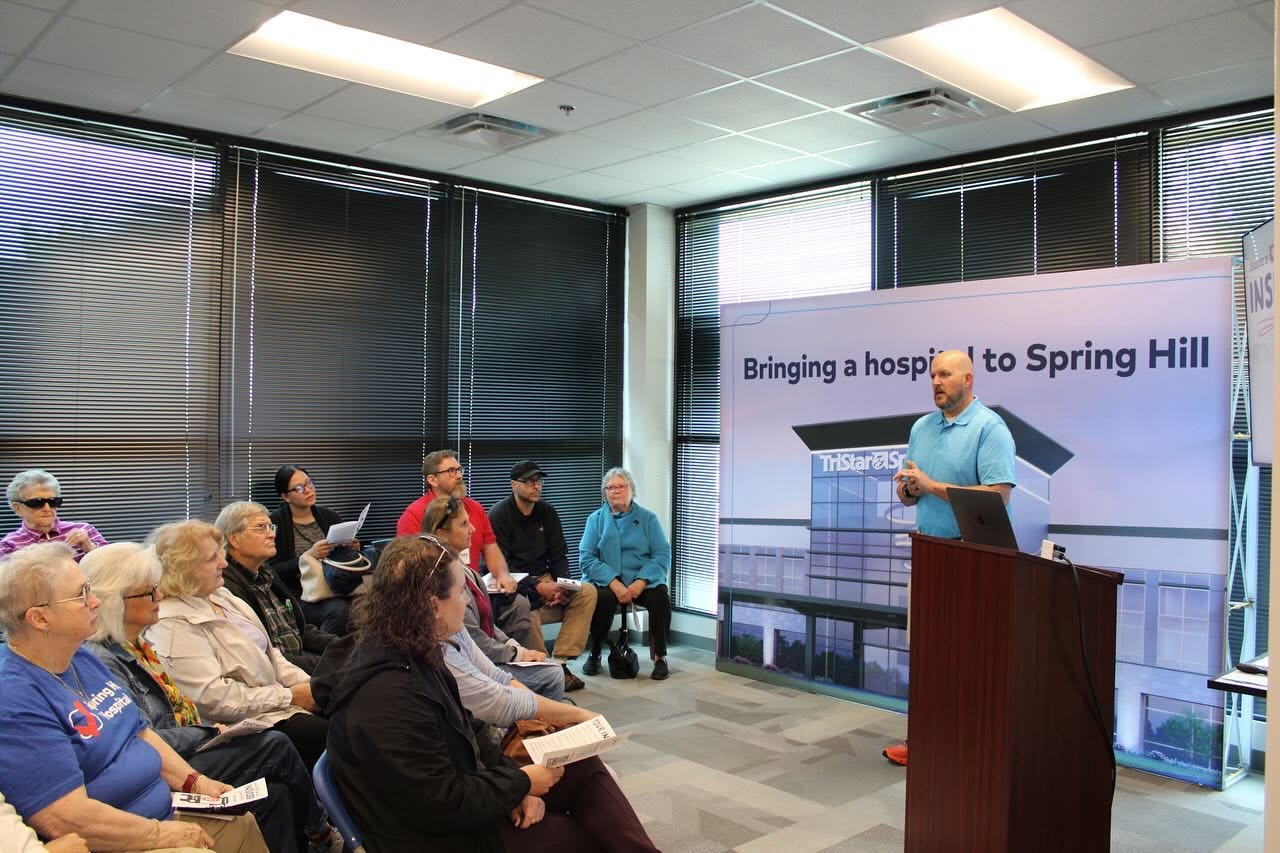


Michigan healthcare freedom community forum

The U.S. Department of Justice dropped the hammer on an array of thieves who have been bleeding Medicaid and Medicare this morning:
National Health Care Fraud Takedown Results in 324 Defendants Charged in Connection with Over $14.6 Billion in Alleged FraudLargest Justice Department Health Care Fraud Takedown in History - More than Doubles Prior Record of $6 Billion
Office of Public Affairs - June 30, 2025
The Justice Department today announced the results of its 2025 National Health Care Fraud Takedown, which resulted in criminal charges against 324 defendants, including 96 doctors, nurse practitioners, pharmacists, and other licensed medical professionals, in 50 federal districts and 12 State Attorneys General’s Offices across the United States, for their alleged participation in various health care fraud schemes involving over $14.6 billion in intended loss. The Takedown involved federal and state law enforcement agencies across the country and represents an unprecedented effort to combat health care fraud schemes that exploit patients and taxpayers.
Demonstrating the significant return on investment that results from health care fraud enforcement efforts, the government seized over $245 million in cash, luxury vehicles, cryptocurrency, and other assets as part of the coordinated enforcement efforts. As part of the whole-of-government approach to combating health care fraud announced today, the Centers for Medicare and Medicaid Services (CMS) also announced that it successfully prevented over $4 billion from being paid in response to false and fraudulent claims and that it suspended or revoked the billing privileges of 205 providers in the months leading up to the Takedown. Civil charges against 20 defendants for $14.2 million in alleged fraud, as well as civil settlements with 106 defendants totaling $34.3 million, were also announced as part of the Takedown.
Today’s Takedown was led and coordinated by the Health Care Fraud Unit of the Department of Justice Criminal Division’s Fraud Section and its core partners from U.S. Attorneys’ Offices, the Department of Health and Human Services Office of Inspector General (HHS-OIG), the Federal Bureau of Investigation (FBI), and the Drug Enforcement Administration (DEA). The cases were investigated by agents from HHS-OIG, FBI, DEA, and other federal and state law enforcement agencies. The cases are being prosecuted by Health Care Fraud Strike Force teams from the Criminal Division’s Fraud Section, 50 U.S. Attorneys’ Offices nationwide, and 12 State Attorneys General Offices.
“This record-setting Health Care Fraud Takedown delivers justice to criminal actors who prey upon our most vulnerable citizens and steal from hardworking American taxpayers,” said Attorney General Pamela Bondi. “Make no mistake – this administration will not tolerate criminals who line their pockets with taxpayer dollars while endangering the health and safety of our communities.”
“As part of making healthcare accessible and affordable to all Americans, HHS will aggressively work with our law enforcement partners to eliminate the pervasive health care fraud that bedeviled this agency under the former administration and drove up costs,” said Secretary Robert F. Kennedy Jr. of the Department of Health and Human Services.
“The Criminal Division is intensely committed to rooting out health care fraud schemes and prosecuting the criminals who perpetrate them because these schemes: (1) often result in physical patient harm through medically unnecessary treatments or failure to provide the correct treatments; (2) contribute to our nationwide opioid epidemic and exacerbate controlled substance addiction; and (3) do all of that while stealing money hardworking Americans contribute to pay for the care of their elders and other vulnerable citizens,” said Matthew R. Galeotti, Head of the Justice Department’s Criminal Division. “The Division’s Health Care Fraud Unit and U.S. Attorneys’ Offices stand united with our law enforcement partners in this fight, and we will continue to use every tool at our disposal to protect the integrity of our health care programs for the American people.”
“The scale of today’s Takedown is unprecedented, and so is the harm we’re confronting. Individuals who attempt to steal from the federal health care system and put vulnerable patients at risk will be held accountable,” said Acting Inspector General Juliet T. Hodgkins of HHS-OIG. “Our agents at HHS-OIG work relentlessly to detect, investigate, and dismantle these fraud schemes. We are proud to stand with our law enforcement partners in protecting taxpayer dollars and safeguarding patient care.”
“Health care fraud drains critical resources from programs intended to help people who truly need medical care,” said FBI Director Kash Patel. “Today’s announcement demonstrates our commitment to pursuing those who exploit the system for personal gain. With more than $13 billion in fraud uncovered, this is the largest takedown for this initiative to date. Together, the FBI and our law enforcement partners will continue to hold those accountable who steal from the American people and undermine our health care systems.”
Transnational Criminal Organizations
29 defendants were charged for their roles in transnational criminal organizations alleged to have submitted over $12 billion in fraudulent claims to America’s health insurance programs.
For instance, a nationwide investigation known as Operation Gold Rush resulted in the largest loss amount ever charged in a health care fraud case brought by the Department. These charges were announced in the Eastern District of New York, the Northern District of Illinois, the Central District of California, the Middle District of Florida, and the District of New Jersey against 19 defendants. Twelve of these defendants have been arrested, including four defendants who were apprehended in Estonia as a result of international cooperation with Estonian law enforcement and seven defendants who were arrested at U.S. airports and the U.S. border with Mexico, cutting off their intended escape routes as they attempted to avoid capture.
The organization allegedly used a network of foreign straw owners, including individuals sent into the United States from abroad, who, acting at the direction of others using encrypted messaging and assumed identities from overseas, strategically bought dozens of medical supply companies located across the United States. They then rapidly submitted $10.6 billion in fraudulent health care claims to Medicare for urinary catheters and other durable medical equipment by exploiting the stolen identities of over one million Americans spanning all 50 states and using their confidential medical information to submit the fraudulent claims. As alleged, the organization exploited the U.S. financial system by laundering the fraudulent proceeds and deploying a range of tactics to circumvent anti-money laundering controls to transfer funds into cryptocurrency and shell companies located abroad. The arrests announced today also include a banker who facilitated the money laundering of fraud proceeds on behalf of the organization through a U.S.-based bank.
The Health Care Fraud Unit’s Data Analytics Team and its partners detected the anomalous billing through proactive data analytics, and HHS-OIG and CMS successfully prevented the organization from receiving all but approximately $41 million of the approximately $4.45 billion that was scheduled to be paid by Medicare. HHS and CMS intend to seek to return the $4.41 billion in escrow to the Medicare trust fund for needed medical care. The scheme nonetheless resulted in payments of approximately $900 million from Medicare supplemental insurers. To date, law enforcement has seized approximately $27.7 million in fraud proceeds as part of Operation Gold Rush.
In another action involving foreign influence, charges were filed in the Northern District of Illinois against five defendants, including two owners and executives of Pakistani marketing organizations, in connection with a $703 million scheme in which Medicare beneficiaries’ identification numbers and other confidential health information were allegedly obtained through theft and deceptive marketing. The defendants allegedly used artificial intelligence to create fake recordings of Medicare beneficiaries purportedly consenting to receive certain products. According to court documents, the beneficiaries’ confidential information was then illegally sold to laboratories and durable medical equipment companies, which used this unlawfully obtained and fraudulently generated data to submit false claims to Medicare. Certain defendants controlled dozens of nominee-owned durable medical equipment companies and laboratories that allegedly submitted fraudulent claims for products and services the beneficiaries did not request, need, or receive. Certain defendants also allegedly conspired to conceal and launder the fraud proceeds from bank accounts they controlled in the United States to bank accounts overseas. In total, the defendants caused approximately $703 million in alleged fraudulent claims to Medicare and Medicare Advantage plans, which paid approximately $418 million on those claims. The government seized approximately $44.7 million from various bank accounts related to this case.
Finally, a defendant based in Pakistan and the United Arab Emirates who owned a billing company allegedly orchestrated a scheme to prey upon vulnerable individuals in need of addiction treatment by conspiring with treatment center owners to fraudulently bill Arizona Medicaid approximately $650 million for substance abuse treatment services. According to court documents, some of the services billed were never provided, while other services were provided at a level that was so substandard that it failed to serve any treatment purpose. As part of the conspiracy, treatment center owners allegedly paid illegal kickbacks in exchange for the referral of patients recruited from the homeless population and Native American reservations. The defendant received at least $25 million of ill-gotten Arizona Medicaid funds as a result of the conspiracy and is charged with a money laundering offense for his alleged use of those funds to purchase a $2.9 million home located on a golf estate in Dubai.
Fraudulent Wound Care
Charges were filed in the District of Arizona and the District of Nevada against seven defendants, including five medical professionals, in connection with approximately $1.1 billion in fraudulent claims to Medicare and other health care benefit programs for amniotic wound allografts. As alleged, certain defendants targeted vulnerable elderly patients, many of whom were receiving hospice care, and applied medically unnecessary amniotic allografts to these patients’ wounds. Many of the allografts allegedly were applied without coordination with the patients’ treating physicians, without proper treatment for infection, to superficial wounds that did not need this treatment, and to areas that far exceeded the size of the wound. Certain defendants allegedly received millions in illegal kickbacks from the fraudulent billing scheme.
“Today's unprecedented enforcement action demonstrates that CMS and our federal partners are united in our mission to protect the integrity of Medicare and Medicaid by crushing waste, fraud, and abuse," said CMS Administrator Dr. Mehmet Oz. "Every dollar we prevent from going to fraudsters is a dollar that stays in the system to serve legitimate beneficiaries. Through advanced data analytics, real-time monitoring, and swift administrative action, CMS is leading the fight to protect Medicare, Medicaid, and the trust Americans place in these vital programs. We're not waiting for fraud to happen—we're stopping it before it starts."
Prescription Opioid Trafficking
74 defendants, including 44 licensed medical professionals, were charged across 58 cases in connection with the alleged illegal diversion of over 15 million pills of prescription opioids and other controlled substances. For example, five defendants associated with one Texas pharmacy were charged with the unlawful distribution of over 3 million opioid pills. As alleged, the defendants conspired to distribute massive quantities of oxycodone, hydrocodone, and carisoprodol, which were subsequently trafficked by street-level drug dealers, generating large profits for the defendants. This coordinated action is a continuation of the Health Care Fraud Unit’s systematic approach to stopping drug trafficking organizations and their pharmaceutical wholesale suppliers, which together have fueled an epidemic of prescription opioid abuse for nearly a decade.
DEA also announced today that in the last six months, DEA charged 93 administrative cases seeking the revocation of pharmacies, medical practitioners, and companies authority to handle and/or prescribe controlled substances.
“Health care fraud isn’t just theft — it’s trafficking in trust. Today’s announcement shows that when doctors become drug dealers and treatment centers become profit-driven fraud rings, DEA will act,” said Acting Administrator Robert Murphy of the DEA. “We’re targeting the entire ecosystem of fraud — from pill mills in Texas to kickback clinics exploiting Native communities. If you abuse your medical license to push poison or pad your pockets, we will hold you accountable.”
Telemedicine and Genetic Testing Fraud
In today’s Takedown, 49 defendants were charged in connection with the submission of over $1.17 billion in allegedly fraudulent claims to Medicare resulting from telemedicine and genetic testing fraud schemes. For example, in the Southern District of Florida, prosecutors charged an owner of telemedicine and durable medical equipment companies with a $46 million scheme in which Medicare beneficiaries were allegedly targeted through deceptive telemarketing campaigns and then fraudulent claims were submitted to Medicare for durable medical equipment and genetic tests for these beneficiaries. The Department continues to focus on eliminating health care fraud schemes that depend on telemedicine, including schemes involving fraudulent claims for genetic testing, durable medical equipment, and COVID-19 tests.
Other Health Care Fraud Schemes
The other cases announced today charge an additional 170 defendants with various other health care fraud schemes involving over $1.84 billion in allegedly false and fraudulent claims to Medicare, Medicaid, and private insurance companies for diagnostic testing, medical visits, and treatments that were medically unnecessary, provided in connection with kickbacks and bribes, or never provided at all. For example, in the Western District of Tennessee, prosecutors charged three defendants, including business owners and a pharmacist, with a $28.7 million scheme to defraud the Federal Employees’ Compensation Fund by allegedly billing for medications for injured United States Postal Service employees that were never prescribed by a licensed practitioner and largely were not dispensed as claimed. And in the Western District of Washington and the Northern District of California, prosecutors charged medical providers with allegedly stealing fentanyl and hydrocodone, respectively, that was meant for the providers’ patients, including child patients in need of anesthesia.
“VA’s Integrated Veteran Care Programs provide critical community-based health care to our nation’s disabled veterans and their dependents,” said Acting Inspector General David Case of the Department of Veterans Affairs Office of Inspector General (VA-OIG). “Robust oversight of VA’s health care system is one of VA-OIG’s highest priorities. VA-OIG is committed to holding accountable those who defraud government benefits programs intended to care for our nation’s heroes.”
Breaking Down Silos in the Fight Against Health Care Fraud
In connection with the coordinated nationwide law enforcement operation, the Department is announcing that it is working closely with HHS-OIG, FBI, and other agencies to create a Health Care Fraud Data Fusion Center to bring together experts from the Department’s Criminal Division, Fraud Section, Health Care Fraud Unit Data Analytics Team; HHS-OIG; FBI; and other agencies to leverage cloud computing, artificial intelligence, and advanced analytics to identify emerging health care fraud schemes. The Health Care Fraud Unit’s Data Analytics Team was established in 2018 to enhance the Unit’s ability to detect, investigate, and prosecute complex health care fraud schemes. Joining forces with data analysts from HHS-OIG, FBI, and other partners will increase efficiency, detection, and rapid prosecution of emerging health care fraud schemes. It will also implement the President’s Executive Order Stopping Waste, Fraud, and Abuse by Eliminating Information Silos (Exec. Order No. 14243, 3 C.F.R. 294 (2025)) by reducing duplicative data teams, increasing operational efficiency through a whole-of-government approach, and leveraging cloud computing, artificial intelligence, and other agency resources.
Principal Assistant Deputy Chief Jacob Foster, Assistant Deputy Chief Rebecca Yuan, Trial Attorney Miriam L. Glaser Dauermann, and Data Analyst Elizabeth Nolte, all of the Health Care Fraud Unit of the Criminal Division’s Fraud Section, led and coordinated this year’s Takedown. The cases are being prosecuted by the Health Care Fraud Unit’s National Rapid Response, Florida, Gulf Coast, Los Angeles, Midwest, New England, Northeast, and Texas Strike Forces; U.S. Attorneys’ Offices for the District of Arizona, Central District of California, Northern District of California, Southern District of California, District of Columbia, District of Connecticut, District of Delaware, Middle District of Florida, Northern District of Florida, Southern District of Florida, Middle District of Georgia, District of Idaho, Northern District of Illinois, Eastern District of Kentucky, Western District of Kentucky, Eastern District of Louisiana, Middle District of Louisiana, District of Maine, District of Massachusetts, Eastern District of Michigan, Western District of Michigan, Northern District of Mississippi, Southern District of Mississippi, District of Montana, District of Nevada, District of New Hampshire, District of New Jersey, Eastern District of New York, Northern District of New York, Southern District of New York, Western District of New York, Eastern District of North Carolina, Western District of North Carolina, District of North Dakota, Northern District of Ohio, Southern District of Ohio, Northern District of Oklahoma, Western District of Oklahoma, District of Oregon, Eastern District of Pennsylvania, District of South Carolina, Middle District of Tennessee, Western District of Tennessee, Northern District of Texas, Southern District of Texas, Western District of Texas, District of Vermont, Eastern District of Virginia, Western District of Washington, and Northern District of West Virginia; and State Attorneys General’s Offices for California, Illinois, Indiana, Louisiana, Massachusetts, Michigan, Missouri, New York, Ohio, Pennsylvania, South Carolina, and Wisconsin. The Health Care Fraud Unit’s Data Analytics Team used cutting-edge data analytics to identify and support the investigations that led to these charges.
In addition to FBI, HHS-OIG, DEA, and CMS, HSI, VA-OIG, IRS Criminal Investigation, Defense Criminal Investigative Service, Department of Labor, United States Postal Service Office of Inspector General, Office of Personnel Management Office of Inspector General, and other federal, state, and local law enforcement agencies participated in the operation. The Medicaid Fraud Control Units of California, the District of Columbia, Florida, Georgia, Illinois, Indiana, Louisiana, Massachusetts, Michigan, Missouri, New York, North Carolina, North Dakota, Ohio, Pennsylvania, South Carolina, Texas, Virginia, and Wisconsin also participated in the investigation of many of the federal and state cases announced today.
The Fraud Section leads the Criminal Division’s efforts to combat health care fraud through the Health Care Fraud Strike Forces. Prior to the charges announced as part of today’s nationwide Takedown and since its inception in March 2007, the Health Care Fraud Strike Force, which operates in 27 districts, charged more than 5,400 defendants who collectively billed Medicare, Medicaid, and private health insurers more than $27 billion.
The following materials related to today’s announcement are available on the Health Care Fraud Unit’s website through these links:
• Graphics and Resources
• Case Descriptions
• Court Documents
An indictment, information, or complaint is merely an allegation. All defendants are presumed innocent until proven guilty beyond a reasonable doubt in a court of law.
The Michigan cases:
Eastern District of Michigan
- Usman Ahmad, 66, of Lake, Orion, Michigan; Durand Bynum, 46, of Canton, Michigan; Ebony Daniels, 33, of Eastpointe, Michigan; and Allen Satawhite, 37, of Detroit, Michigan were charged in a superseding indictment with conspiracy to distribute and distribution of controlled substances in connection with their roles in an unlawful scheme to distribute Schedule II controlled substances oxycodone, oxycodone-acetaminophen (Percocet); and hydrocodone-acetaminophen (Norco). As alleged in the indictment, the owner of P & A Aftercare, located in Southfield, Michigan, hired several doctors to issue controlled substance prescriptions for a cadre of “fake” patients, without medical necessity and outside the scope of professional medical practice, in exchange for cash payments. The “fake” patients were recruited by Bynum, Daniels, Satawhite and others. Ahmad, a licensed pharmacist, owned and operated Detroit Hoover Pharmacy, in Detroit, Michigan. He used the pharmacy to engage in a scheme and pattern of illegal conduct involving the unlawful distribution of prescription drug-controlled substances issued by the doctors at P & A Aftercare. Specifically, Ahmad distributed prescription drugs from the pharmacy illegally, outside the course of usual professional pharmacy practice and for no legitimate medical purpose. The case is being prosecuted by Assistant U.S. Attorneys for the Eastern District of Michigan Regina R. McCullough and Philip A. Ross.
- Wahid Makki, 62, Zainab Makki a/k/a “Zeinab Makki,” 62, both of Dearborn Heights, Michigan, together with the two pharmacies they operated, Kirtland Corp. a/k/a New Millennium Drugs and Western Wayne Pharmacy, LLC, have agreed to pay the United States and the State of Michigan $1,500,000 to resolve a civil qui tam lawsuit alleging that they violated the False Claims Act by submitting false claims to the Medicare and Medicaid Programs for prescription drugs that New Millenium Drugs and Western Wayne Pharmacy billed to the Programs, but never dispensed. In addition, Wahid Makki has agreed to his exclusion from the Medicare, Medicaid, and all other federal health care programs for 10 years. The case is being prosecuted by Assistant U.S. Attorney Leslie Wizner of the U.S. Attorney’s Office for the Eastern District of Michigan, in coordination with Assistant Attorney General Timothy Erickson of the Michigan Department of Attorney General’s Health Care Fraud Division.
- Dr. Mohmmed Al-Shihabi, 55, of Northville, Michigan, was charged by indictment with conspiracy to commit health care fraud and four counts of health care fraud in connection with a $1.9 million home health care fraud scheme. As alleged in the indictment, Dr. Al-Shihabi accepted referrals of Medicare beneficiaries from a home health agency and submitted approximately $450,000 in false and fraudulent claims to Medicare for services purportedly provided to these beneficiaries. Medicare paid approximately $230,000 based on these claims. As further alleged, in exchange for these referrals, Dr. Al-Shihabi falsely certified the beneficiaries as homebound, enabling the home health agency to submit approximately $1.5 million in false and fraudulent claims for medically unnecessary home health services. Medicare paid approximately $1.3 million based on these claims. The case is being prosecuted by Trial Attorneys Ryan Elsey and Ahmad Huda of the Midwest Strike Force.
- Dr. Priti Bhardwaj, 55, of Bloomfield Township, Michigan, was charged by indictment with conspiracy to commit health care fraud and three counts of health care fraud in connection with a $1.8 million home health care fraud scheme. As alleged in the indictment, Dr. Bhardwaj accepted referrals of Medicare beneficiaries from several Detroit-area home health agencies and submitted approximately $1,000,000 in false and fraudulent claims to Medicare for services purportedly provided to these beneficiaries. Medicare paid approximately $249,000 based on these claims. As further alleged, in exchange for these referrals, Dr. Bhardwaj falsely certified the beneficiaries as homebound, enabling the home health agencies to submit approximately $790,000 in false and fraudulent claims for medically unnecessary home health services. Medicare paid approximately $700,000 based on these claims. The case is being prosecuted by Trial Attorneys Ryan Elsey and Ahmad Huda of the Midwest Strike Force.
- Ali Naserdean, 32, of Dearborn, Michigan, was charged by indictment with conspiracy to commit health care fraud and three counts of health care fraud in connection with his ownership of Warren Pharmacy Rx LLC and his work as a pharmacy technician at Gracee Pharmacy PLLC and Warren Family Pharmacy LLC. As alleged in the indictment, Naserdean used his control and access to the pharmacies to bill Medicare, Medicaid, and Blue Cross Blue Shield of Michigan approximately $6,021,000 for medications that were medically unnecessary, never dispensed, and/or never prescribed by a physician. Assets valued at approximately $1,275,085 were seized as part of this case, including $1.1 million in cash, a Range Rover, and designer watches and bags. The case is being prosecuted by Trial Attorneys Jeffrey A. Crapko and Ahmad Huda of the Midwest Strike Force.
- Villa Financial Services LLC, Villa Olympia Investment LLC, and six southeast Michigan Villa nursing homes – The Ambassador, Father Murray, Imperial, Regency, St. Joseph’s and Westland – have agreed to pay the United States and the State of Michigan a total of $4,500,000, to resolve a civil qui tam lawsuit alleging that they violated the False Claims Act by systematically failing to provide services to nursing home residents and/or providing materially and grossly substandard services to nursing home residents. The case is being jointly handled by Assistant U.S. Attorney Leslie Wizner of the U.S. Attorney’s Office for the Eastern District of Michigan and Trial Attorney Kelly McAuliffe of the U.S. Department of Justice’s Commercial Litigation Branch - Fraud Section, in coordination with Assistant Attorney General Brendan Maturen of the Michigan Department of Attorney General’s Health Care Fraud Division.
Western District of Michigan
- Paul Eric Lyons, 41, of Fraser, Michigan, and Tiffany Nicole Childs, 35, of Sterling Heights, Michigan, were charged by information with conspiracy to commit health care fraud in connection with a scheme to submit nearly $1.4 million in claims for dental services that were not rendered to a Michigan dental insurance company, which resulted in a loss of nearly $380,000.00. As alleged in the information, Lyons conspired with Childs and other recruiters to cause employees at various automobile manufacturing plants who subscribed to the victim insurer’s dental plan to provide their personal identifying information and insurance information, usually unwittingly, to the scheme. Lyons then used this information to submit claims for dental services in the names of these individuals from actual dental clinics where he worked, as if the services were provided by licensed Michigan dentists. In reality, Lyons stole the names of dentists who were employees or volunteers at the clinics where he worked to make it appear to the victim insurer that services were actually provided by these licensed dentists. When Lyons submitted bills in the names of dentists that were not in the insurer’s network, the insurance subscribers received the insurance checks, which they believed were insurance rebates, and shared the proceeds with Childs and Lyons. As time progressed, Lyons created his own fictitious dental clinics and stole the identifiers of actual patients at the dental clinics where he worked and used their identities to bill the victim insurance company for additional services that were not rendered. Lyons used the names of in-network dentists for these claims submissions and received payment directly from the victim insurer by disguising his identity with CashApp accounts in various alias names. Lyons was additionally charged with aggravated identity theft for his use of the means of identification of one of the Michigan dentists to carry out his health care fraud scheme. The case is being prosecuted by Assistant U.S. Attorney Ronald M. Stella of the U.S. Attorney’s Office for the Western District of Michigan.

I'm glad to see Michigan fully cooperating. However, there are two major concerns.
First, AMAC reports an offshoot of this huge operation.
<clip>
The department also announced that it would work with the HHS, FBI, and other federal agencies to create a “Health Care Fraud Data Fusion Center” that would bring experts together to “leverage cloud computing, artificial intelligence, and advanced analytics” in an effort to detect health care fraud schemes in the future.
<clip>
I hope and pray this will not closely resemble Michigan's proposed "real-time" health data collection center. It's an unfortunate fact of today's health policy that Big Brother is never far away.
The second red flag is the DOJ's apparent disregard for necessary opioid access. It's one thing to cut off individual bad actors from prescribing or working with opioids. It would be reckless overkill to shut down entire pharmacies or other institutions.
The American Chemical Society documents fallacies in the anti-opioid narrative.
The full study is paywalled, but the Abstract gives the gist.
https://pubs.acs.org/doi/10.1021/acsptsci.4c00613
Opiophobia: Misinformation, Misconceptions, Misrepresentations, Perspectives, and Consequences
June 18, 2025
ABSTRACT
A continuing narrative regarding the opioid epidemic is that even short-term (7 days or less) use of opioids under medical supervision to treat acute pain will often lead to opioid use disorder (OUD) and/or addiction. It is also believed by some that the best way to address this perceived problem is to avoid using opioids altogether or to severely limit the use of prescription opioids, especially after surgery. It is further believed by some that severely limiting the number of prescriptions will greatly reduce the number of deaths due to opioid overdoses occurring as a consequence of the opioid epidemic. There is, however, substantial evidence that this is not the case. This review/commentary explores this evidence in the context of organizations, researchers, and clinicians that strive to further drastically decrease or eliminate the use of prescription opioids.
John A. Bumpus is Professor of Chemistry and Biochemistry at the University of Northern Iowa, Cedar Falls, Iowa.
Ali Naserdean, indicted last year in the aforementioned takedown, pleaded guilty on April 29th to defrauding health care benefit programs by billing for prescription medications that he never dispensed and providing unlawful prescriptions of oxycodone to drug traffickers in exchange for cash:
Pharmacy Technician Pleads Guilty to $5.6M Health Care Fraud Scheme and Illegal Distribution of Oxycodone
Thursday, April 30, 2026
For Immediate Release
DoJ Office of Public AffairsA Michigan man pleaded guilty yesterday to defrauding health care benefit programs, including Medicare and Medicaid, by billing for prescription medications that he never dispensed and providing unlawful prescriptions of oxycodone to drug traffickers in exchange for cash.
According to court documents, Ali Naserdean, 32, of Dearborn Heights, Michigan, was a pharmacy technician at three metro-Detroit pharmacies. From 2019 through 2022, Naserdean and his co-conspirator submitted false and fraudulent claims to health care benefit programs for prescription drugs that were not ordered by a doctor and never dispensed to the patient. Naserdean and his co-conspirator used forged prescriptions from doctors to hide their scheme, when the patient had never seen the listed doctor and the medication had never actually been prescribed. Naserdean and his co-conspirator caused over $5.6 million of loss to Medicare, Medicaid, and Blue Cross Blue Shield of Michigan. Additionally, from 2019 through 2022, Naserdean provided unlawful prescriptions of oxycodone to drug traffickers in exchange for cash, without regard to whether the prescriptions were actually prescribed by physicians or dispensed in good faith.
Naserdean pleaded guilty to conspiracy to commit health care fraud and possession with intent to illegally distribute oxycodone. He is scheduled to be sentenced on Sept. 1 and faces a maximum penalty of 20 years in prison. A federal district court judge will determine any sentence after considering the U.S. Sentencing Guidelines and other statutory factors.
Assistant Attorney General Colin M. McDonald of the Justice Department’s National Fraud Enforcement Division; U.S. Attorney Jerome F. Gorgon Jr. for the Eastern District of Michigan; Special Agent in Charge Reuben Coleman of the FBI Detroit Field Office; and Special Agent in Charge Thomas Ethridge of the Department of Health and Human Services Office of Inspector General (HHS-OIG) made the announcement.
The FBI Detroit Field Office, HHS-OIG, and the City of Dearborn Police Department investigated the case.
Trial Attorney Jeffrey A. Crapko of the Criminal Division’s Fraud Section and Assistant U.S. Attorney Paul A. Kuebler for the Eastern District of Michigan prosecuted the case.
On April 7, the Department of Justice announced the creation of the Fraud Division. The Fraud Division is laser-focused on investigating and prosecuting those who commit fraud against the American people. The Department’s work to combat fraud supports President Trump’s Task Force to Eliminate Fraud, a whole-of-government effort chaired by Vice President J.D. Vance to eliminate fraud, waste, and abuse within Federal benefit programs.
The Department of Justice’s Health Care Fraud Strike Force Program, currently comprised of eight strike forces operating in federal districts across the country, has charged more than 6,200 defendants who collectively billed federal health care programs and private insurers more than $45 billion since 2007. In addition, the Centers for Medicare & Medicaid Services, working in conjunction with the Office of the Inspector General for the Department of Health and Human Services, are taking steps to hold providers accountable for their involvement in health care fraud schemes. More information can be found at www.justice.gov/criminal-fraud/health-care-fraud-unit.
The 2026 DoJ National Health Care Fraud Takedown: 455 Defendants Charged With Over $ 6.5 Billion In Fraud
National Health Care Fraud Takedown Results in 455 Defendants Charged in Connection with Over $6.5 Billion in Alleged Fraud
For Immediate Release - June 23, 2026
DoJ Office of Public AffairsRecord Medicaid Fraud Charges Largest Number of States Participating in Health Care Fraud Takedown History
The Justice Department today announced the 2026 National Health Care Fraud Takedown, which resulted in charges against 455 defendants, including 90 doctors and other licensed medical professionals, for their alleged participation in health care fraud and opioid abuse schemes involving over $6.5 billion in false claims and significant patient harm, including death. Today’s Takedown represents a new era in federal, state, and international cooperation to combat health care fraud: cases in 56 federal districts and 45 U.S. states and territories, with 50 state Medicaid Fraud Control Units participating, the most in Department history. In addition, unprecedented international cooperation over the two-week Takedown resulted in the apprehension and return to the United States of the following health care fraudsters: one defendant in Kyrenia in connection with an over $3.7 billion scheme; two defendants in Estonia in connection with a previously charged $10.6 billion scheme; and, in the Philippines, one of FBI’s Most Wanted Fraudsters in connection with a previously-charged $1.2 billion telemedicine fraud scheme. The Takedown involves the cutting-edge use of data analytics to target the worst actors; the seizure of over $182 million in cash, luxury vehicles, jewelry, and other assets; and full-spectrum accountability for all criminal actors from doctor’s offices to corporate boardrooms.
Today’s coordinated enforcement action involves a whole-of-government approach, including:
- Actions by the Centers for Medicare and Medicaid Services (CMS) to suspend 1,079 providers and revoke billing privileges for 1,403 providers.
- 48 Civil Monetary Payment settlements amounting to over $73 million, over 1,400 provider exclusions, and 25 actions by the U.S. Department of Health and Human Services, Office of Inspector General (“HHS-OIG”) under the Civil Monetary Penalties Law seeking more than $10 billion in payments to the Medicare Trust Fund from payments that CMS caught and suspended before the funds were paid to the fraudulent providers.
- Civil charges against 13 defendants for $14.8 million in health care fraud schemes, as well as civil settlements with 31 defendants totaling $23 million.
- 928 administrative cases by the Drug Enforcement Administration (DEA) seeking the revocation of authority to handle and/or prescribe controlled substances since October 1, 2025.
“This year’s National Health Care Fraud Takedown represents the greatest whole-of-government effort to combat health care fraud in our Nation’s history,” said Acting Attorney General Todd Blanche. “Under the decisive leadership of President Donald Trump, Vice President JD Vance, the White House Task Force to Eliminate Fraud, and our law enforcement partners, this administration has ushered in a new era of enforcement that will safeguard taxpayer dollars.”
“We are aggressively scaling our offensive against anyone using health care as a front to steal from the American people,” said Assistant Attorney General Colin M. McDonald of the Justice Department’s National Fraud Enforcement Division. “As today’s cases and arrests show, there is no case too big, no scheme too complex, and no hiding place too remote for our relentless fraud-fighting team. Our message is simple: if you put profit over patients, you should expect to be put in prison.”
“Health care fraud steals from taxpayers, exploits vulnerable patients, and puts lives at risk,” said U.S. Department of Health and Human Services (HHS) Secretary Robert F. Kennedy, Jr. “Today’s historic enforcement action sends a clear message: if you use our health care system to enrich yourself at the expense of patients or the American people, we will find you, we will prosecute you, and we will hold you accountable. HHS will continue working with our law enforcement partners to protect patients, safeguard taxpayer dollars, and restore integrity to our health care system.”
“The coordination in the Health Care Fraud Takedown reinforces the Trump Administration’s efforts to end the crimes of bad actors who have ripped off U.S. taxpayers,” said Department of Homeland Security Secretary Markwayne Mullin. “This is a whole of government effort, to hold those who defraud our nation accountable. Our message is clear: if you steal from American taxpayers, you will face the consequences.”
“This results of this nationwide healthcare takedown are historic,” said FBI Director Kash Patel. “Under the leadership of President Trump, Vice President Vance, and the White House Task Force to Eliminate Fraud, this FBI worked alongside our DOJ partners to arrest and charge over 450 people, including almost 100 medical professionals, for over $6 billion in alleged healthcare fraud schemes - showing the enormous amount of work done by our interagency law enforcement team over the last month and beyond. While today’s announcement is one of the largest on record–every arrest is a continued message to criminal actors who rob American taxpayers that you will not get away with your crimes.”
Fraudulent Wound Care Schemes
Charges were filed against 11 defendants, including a company executive and eight medical professionals, across six districts in connection with billions of dollars in fraudulent claims for amniotic wound allografts. In the District of Arizona, the Vice President of Sales for a company that sold allografts was charged in a nationwide illegal kickback and health care fraud scheme. From approximately December 2021 through June 2024, providers billed Medicare over $4 billion for this company’s allografts, resulting in over $2 billion in payments. This significant spike in allograft billings was alleged to have been driven not by medical necessity, but by a kickback scheme that generated substantial profit margins and lavish lifestyles for marketers and providers who participated. The company did not manufacture allografts and instead acquired allografts from tissue banks and relabeled them for sale at a 2,000% mark-up, charging up to $1,450 per square centimeter. The defendant is alleged to have paid illegal kickbacks of approximately 40% of that amount, allowing marketers and medical providers to pocket approximately $500-600 per square centimeter. These lucrative kickbacks allegedly caused the defendant and others to target hospice patients and apply the allografts without coordination with the patients’ treating physicians, without proper treatment for infection, to superficial wounds that did not need this treatment, and to areas that far exceeded the size of the wound. The defendant received over $24 million from the company, which he used to purchase multi-million-dollar houses, million-dollar life insurance policies, luxury vehicles, including a $135,000 Maserati, and luxury watches. This follows 15.5- and 14-year sentences obtained last year in connection with the scheme.
Today’s charges reflect the Department’s intention to prosecute both the architects of fraud and those who betray their oath to carry out the scheme. In the Southern District of Texas, a nurse practitioner was charged for a $906 million scheme in which she applied medically unnecessary allografts and billed Medicare more than $1 million per patient on average. As alleged, the defendant used the fraud proceeds to purchase high-end vehicles, real estate, and luxury jewelry, and to fund the construction of a $4.6 million of a beach resort in the Philippines. The government seized over $30 million in bank accounts, a $594,000 Ferrari 296 GTS, seven other high-end vehicles, an $865,000 custom Bulgari necklace, and $1 million worth of other luxury jewelry.
Image 1
$865,000 Bulgari necklace seized as proceeds of alleged Medicare fraud scheme involving wound allografts; rendering of beach resort in the Philippines constructed with $4.6 million allegedly stolen from Medicare in wound allograft fraud scheme
Similarly, in the Middle District of Florida, three defendants were charged for their roles in an $118 million allograft fraud scheme where a nurse practitioner allegedly used the proceeds to fund her lavish lifestyle, including a luxury box at an NFL stadium and over $400,000 in fine art.
The Health Care Fraud Unit’s Data Analytics Team detected a spike in payment for allografts, leading to prosecutions. CMS separately realigned payment, reducing Medicare’s payment to $127 per square centimeter starting on January 1, 2026. If CMS had not taken action to address unprecedented spending on allografts, the Part B premium increase caused by allograft payments alone would have cost every Medicare beneficiary in the country an extra $11 a month.
Image 2
“Prosecuting criminals who steal from American patients is necessary—but stopping them before a single dollar leaves the building is smarter,” said CMS Administrator Dr. Mehmet Oz. “CMS is done playing catch-up. We’re deploying advanced data analytics to expose fraud networks, freeze suspicious payments, and shut down bad actors before they can do damage to the programs that millions of Americans depend on.”
Data Fusion Center, Financial Intelligence Review Team, and Data Analytics Enhancements
The Health Care Fraud Unit is a leader in employing advanced data analytics. Its Data Fusion Center —announced as part of last year’s Takedown and comprised of experts from the Unit’s Data Analytics Team, HHS-OIG, FBI, and other agencies—used advanced analytics in many of the cases charged today. The Department is announcing the first prosecution arising from the Fusion Center’s Financial Intelligence Review Team, which was formed last year to combine traditional data analytics with financial analysis, in connection with a $67 million scheme to bill Illinois Medicaid for behavioral health services that were not provided. The defendant allegedly submitted claims to Medicaid for 500 or more hours of counseling and therapy services per day, well in excess of what the providers on staff could render even if all providers were working 24 hours per day, and diverted over $27 million to brokerage accounts, $10 million to a luxury car dealership he set up, $4 million for real estate purchases and home improvements, one million for jewelry, watches, purchases, and other luxury items, and over $616,022 for vehicles. Data analysis established that patients were hospitalized at other institutions on days that the defendant billed for behavioral health services, and the Health Care Fraud Unit’s specialized prosecutors opened the investigation within five days of the financial intelligence review. The defendant was arrested less than seven months later at the airport Sunday night attempting to leave the country.
Image 3
Yacht and Bentley Continental GT purchased with proceeds of alleged fraud
In the Central District of California, charges were brought against a hospice owner and two marketers for a $27.7 million Medicare fraud scheme in which the hospice owner allegedly tried to avoid detection through a scheme to purchase information of the recently deceased from a funeral home employee. The defendant was allegedly carrying out a hospice fraud scheme in which he fraudulently enrolled patients who were not terminally ill. Concerned that Medicare and law enforcement used data analytics to monitor the percentage of patients discharged from hospice alive (an indicator of fraud), the hospice owner allegedly paid illegal kickbacks of $1,000 to $3,000 per person to a funeral home employee in exchange for deceased Medicare beneficiaries’ information. The defendant then allegedly billed Medicare for a few days of hospice services for these recently-deceased individuals who hadn’t received hospice care and created fake, back-dated medical records claiming that the beneficiaries had been seen by a physician, thereby allegedly seeking to deceive Medicare by reducing his outlier data metrics.
In today’s Takedown, the Department announced the seizure of over $27 million in fraudulent Medicare payments in the Southern District of Florida as part of a data-driven effort to target “bust-out schemes” involving 12 clinics that billed Medicare millions of dollars for allografts that were never provided to patients. This novel and proactive “follow and seize the money” approach maximized recovery of stolen taxpayer dollars.
To enhance the deployment of advanced analytics to target health care fraud, the Fraud Division and CMS announced today that they have entered an agreement whereby the Fraud Division will be provided cloud computing space in the CMS Integrated Data Repository environment in which to deploy advanced data analytics algorithms and artificial intelligence tools. In addition, the Fraud Division entered into agreements with the Department of Homeland Security and the Federal Trade Commission aimed at breaking down data silos and improving access to information critical to identifying and combatting health care fraud. CMS also is announcing today that it is developing a Claims Core processing with electronic attestation, identify verification, and IP address log-in, and working to get pledges that all Medicaid, Managed Care, and other plans report the same standardized data fields used for Medicare Part B claims data.
Patient Harm
Health care fraud is a top white-collar priority of the Department because it both steals from the taxpayers and risks harm to patients by corrupt medical providers. In the Southern District of Florida, the medical director of a cardiovascular testing and treatment practice was charged in connection with an $89 million scheme to bill for unnecessary cardiovascular tests, such as EKGs and echocardiograms, conducted on student athletes on school campuses. According to the charges, the defendant and his co-conspirators used marketing tactics designed to prey on fears that student athletes could die from sudden cardiac arrest. The defendant then allegedly falsified diagnoses to defraud health care benefit programs for the testing. Despite knowing, as the defendant wrote, that “these kids could be high risk . . . one of them drops dead on the field, they’re coming after both of us,” he allegedly rubber stamped the test results as normal without reviewing them—sometimes approving test results within mere seconds—such that student athletes with cardiac abnormalities were not informed that they needed to stop participating in sports, risking sudden cardiac arrest. Despite one patient’s test results showing an enlarged heart, the defendant allegedly signed off on the test results as normal within approximately 11 seconds of accessing the 63 cardiovascular test result images. Approximately 24 days later, the student athlete died from complications related to an enlarged heart during a basketball practice.
“Safeguarding the integrity of federal health care programs is central to our mission, and the results of this year’s National Health Care Fraud Takedown reflect the strength of our collective commitment. The cases announced today demonstrate not only the scale, but the seriousness of the misconduct uncovered, ranging from patient harming schemes to multibillion dollar fraud operations,” said HHS Inspector General T. March Bell. “HHS-OIG will continue to pursue those who engage in such conduct and hold them accountable. I am grateful for the tireless work of our special agents and for the partnership we share with our federal, state, and local law enforcement colleagues as we work together to protect patients and preserve public funds.”
In Alaska, state prosecutors charged a defendant for medical assistance fraud based on allegations that, while working as a personal care attendant for a Medicaid recipient, the defendant submitted false claims for regularly attending to the recipient’s health and hygiene, at the same time that she was admitted to the hospital for suffering from severe neglect, including being soiled in urine.
Medicaid Fraud
Data shows that Medicaid is a vital government benefit program increasingly targeted by criminals. Building upon the success of the recent Minnesota Health Care Fraud Takedown and the Acting Attorney General’s authorization of an enhancement for the Health Care Fraud Unit to investigate Medicaid fraud nationwide, today’s Takedown includes the largest number of Medicaid fraud defendants and Medicaid fraud loss charged in Department history: 295 defendants and over $518 million in false claims submitted to Medicaid.
In the Eastern District of New York, charges were brought against eight defendants for their role in a $38 million fraud on New York Medicaid for social adult day care services that were medically unnecessary, procured by kickbacks to marketers and beneficiaries, and never provided. Although the permitted occupancy of the social adult day cares (shown below) was only 30 people, the defendants fraudulently submitted claims for services provided to hundreds of beneficiaries per day.
Image 4
Interior of Brooklyn social adult day care centers where allegedly fraudulent bills to New York Medicaid claimed hundreds of beneficiaries received services per day
In the Eastern District of Virginia, the co-owner of a mental health company was charged with a $49 million Virginia Medicaid fraud scheme that targeted the homeless by offering them illegal bribes in the form of hotel stays in exchange for using their Medicaid numbers to bill for crisis stabilization services that they did not need or receive. In the District of Arizona, a defendant was charged for submitting $44 million in fraudulent claims for behavioral services, primarily targeting Native Americans struggling with substance abuse. As alleged, the defendant billed for services that were never provided and falsified therapy notes to reflect that patients had attended therapy sessions.
Transnational Organizations, International Cooperation, and the Most Wanted Fraudsters List
Today’s Takedown demonstrates that no fraudster can hide from the law, whether in the United States or abroad, and involved unprecedented international cooperation. In the 2025 National Health Care Fraud Takedown, 29 defendants were charged for their roles in a transnational criminal organization alleged to have submitted over $10 billion in fraudulent claims. Since then, the organization continued the scheme, and, in the Southern District of Florida, Ibrahim Hilmi was charged in connection with an additional $3.7 billion in false claims for urinary catheters and other durable medical equipment that was never provided. Though the defendant fled, he was apprehended in Kyrenia and made his initial appearance yesterday in the Southern District of Florida. In addition, two other members of the organization who were charged in last year’s Takedown were apprehended in Estonia, extradited to the United States, and made their initial appearance in the Eastern District of New York on June 12. Five additional defendants were charged in connection with the scheme.
Image 5
Ibrahim Hilmi landing in the United States after being apprehended in a $3.7 billion fraud
On June 4, the FBI announced the creation of the Most Wanted Fraudsters List. The list included Herb Kimble, a fugitive in a $1.2 billion telemedicine and durable medical equipment scheme, who, on June 8—just four days later—was apprehended in the Philippines. On June 16, Kimble was indicted in the District of South Carolina with three counts of failure to appear at court hearings. In connection with the Takedown, as a result of the apprehension of Kimble and one other recently-apprehended fraudster on the list, today the FBI announced two new additions to the Most Wanted Fraudsters List: Khalid Satary, wanted in a $547 million genetic testing Medicare fraud scheme, who, after being released on bond over the government’s objection, fled the country and is believed to be in the United Arab Emirates; and Emylee Thai, wanted in a $90 million genetic testing Medicare fraud scheme, who was released on bond, cut-off her ankle monitor, and fled to Vietnam via private charter using a fake passport.
The Department thanks the governments of Estonia, the Philippines, and Turkey for their cooperation in the apprehension of these health care fraud fugitives and defendants.
Illegal Opioid Distribution
36 defendants, including 28 licensed medical professionals, were charged in connection with the alleged illegal diversion of prescription opioids and other controlled substances that resulted in patient harm. In the Eastern District of Pennsylvania, three defendants were charged with conspiracy to unlawfully distribute controlled substances. The defendants allegedly operated a voicemail refill line that allowed patients to request and receive refills of Schedule II controlled substance prescriptions—though some patients who used the refill line to obtain Schedule II controlled substances from the defendants suffered drug overdoses and died, the defendants continued to operate the refill line to prescribe Schedule II controlled substances without interacting with patients. In the Southern District of Texas, a pharmacist and two clinic managers were charged by indictment with drug conspiracy in connection with the distribution of more than 3.4 million pills of opioids and other controlled substances, many of which were prescribed to patients brought to the clinics and pharmacy by street-level drug traffickers for further distribution.
“DEA occupies a unique place in this fight—we sit at the intersection of healthcare, regulation, and law enforcement. Our job is to protect the controlled substance supply chain and ensure medications reach patients who legitimately need them,” said DEA Administrator Terrance Cole. “Those who exploit that system for personal profit threaten both public safety, public health, and the integrity of our healthcare system. We will continue to identify these criminals, stop them, and hold them accountable.”
“Health care fraud is not a victimless crime — it robs American workers of their earned benefits, steals from taxpayers, and undermines the very programs meant to protect them. The Department of Labor, Office of Inspector General is committed to rooting out these despicable schemes with unrelenting determination,” said Anthony P. D’Esposito, Inspector General, U.S. Department of Labor. “Together, with our agency and law enforcement partners, we are dismantling fraudulent operations and holding perpetrators accountable for their crimes against the American people. Real care doesn’t come with kickbacks and fake claims. To every fraudster exploiting the system: your time is up. We will find you; we will investigate you, and we will bring you to justice.”
Today’s Takedown was led and coordinated by the Department’s Health Care Fraud Unit and its core partners from U.S. Attorneys’ Offices, HHS-OIG, FBI, DEA, and Medicaid Fraud Control Units (MFCUs) across the country. The cases are being prosecuted by Health Care Fraud Strike Force teams, 56 U.S. Attorneys’ Offices, and 45 State Attorneys General’s Offices nationwide.
Acting Health Care Fraud Chief Jacob Foster, Acting Principal Assistant Chief Rebecca Yuan, Assistant Chief Justin Woodard, and Data Analyst Elizabeth Nolte, all of the Health Care Fraud Unit, led and coordinated this year’s Takedown. Assistant Chief Emily Gurskis and Acting Assistant Chiefs Miriam Glaser Dauermann and Jil Simon provided valuable coordination assistance.
The cases are being prosecuted by the Health Care Fraud Unit’s National Rapid Response, Florida, Gulf Coast, Los Angeles, Midwest, New England, Northeast, Texas, and West Coast Strike Forces; U.S. Attorneys’ Offices for the Middle District of Alabama, District of Arizona, Central District of California, Southern District of California, District of Colorado, District of Connecticut, District of Delaware, Middle District of Florida, Northern District of Florida, Southern District of Florida, Northern District of Georgia, District of Hawaii, District of Idaho, Northern District of Illinois, Northern District of Iowa, Southern District of Iowa, Western District of Kentucky, Eastern District of Louisiana, Middle District of Louisiana, District of Massachusetts, Eastern District of Michigan, Southern District of Mississippi, District of Montana, District of Nebraska, District of New Hampshire, District of New Jersey, District of New Mexico, Eastern District of New York, Northern District of New York, Southern District of New York, Eastern District of North Carolina, Middle District of North Carolina, Western District of North Carolina, Northern District of Ohio, Northern District of Oklahoma, Western District of Oklahoma, District of Oregon, Eastern District of Pennsylvania, Middle District of Pennsylvania, Western District of Pennsylvania, District of Puerto Rico, District of Rhode Island, District of South Carolina, District of South Dakota, Middle District of Tennessee, Western District of Tennessee, Northern District of Texas, Southern District of Texas, Western District of Texas, District of Vermont, Eastern District of Virginia, Western District of Virginia, Northern District of West Virginia, Southern District of West Virginia, Eastern District of Wisconsin, and Western District of Wisconsin; and State Attorneys General’s Offices, through their MFCUs, in Alaska, Arizona, Arkansas, California, Colorado, Connecticut, Delaware, Florida, Georgia, Hawaii, Idaho, Illinois, Indiana, Iowa, Kansas, Kentucky, Louisiana, Maine, Maryland, Massachusetts, Michigan, Minnesota, Mississippi, Missouri, Montana, Nebraska, Nevada, New Hampshire, New Jersey, New Mexico, New York, Ohio, Oklahoma, Oregon, Pennsylvania, Puerto Rico, Rhode Island, South Carolina, Tennessee, Utah, Vermont, Virgin Islands, Washington, Wisconsin, and West Virginia. In addition, the MFCUs for Alabama, North Carolina, South Dakota, Texas, and Virigina participated in the investigation of federal cases announced today.
In addition to FBI, HHS-OIG, DEA, and MFCUs, CMS, Homeland Security Investigations, the Department of Veterans Affairs, Office of Inspector General, IRS Criminal Investigation, Defense Criminal Investigative Service, Department of Labor, United States Postal Service Office of Inspector General, Office of Personnel Management Office of Inspector General, and other federal, state, and local law enforcement agencies participated in the operation.
“Healthcare fraud schemes deprive veterans of needed services and rob taxpayers,” said Inspector General of the Department of Veterans Affairs Cheryl Mason. “As VA Inspector General, I made it a priority for all VA OIG components to actively pursue those who attempt to defraud VA healthcare programs.”
“Today’s coordinated takedown reflects the Department of War Office of Inspector General’s unwavering commitment to protecting Service members, retirees, and their families from those who exploit federal health care programs,” said Inspector General Platte B. Moring III. “Working alongside our law enforcement partners, the Defense Criminal Investigative Service continues to pursue schemes that endanger patients, erode trust in the medical system, and divert resources critical to military readiness.”
On April 7, the Department of Justice announced the creation of the National Fraud Enforcement Division. The Fraud Division is laser-focused on investigating and prosecuting those who commit fraud against the American people. The Department’s work to combat fraud supports President Trump’s Task Force to Eliminate Fraud, a whole-of-government effort chaired by Vice President J.D. Vance to eliminate fraud, waste, and abuse within Federal benefit programs.
Prior to the charges announced as part of today’s nationwide Takedown and since its inception in March 2007, the National Fraud Division’s Health Care Strike Force program, currently comprised of nine strike forces operating in federal districts across the country, has charged more than 6,200 defendants who collectively billed federal health care programs and private insurers more than $45 billion. In addition, CMS, working in conjunction with HHS-OIG, are taking steps to hold providers accountable for their involvement in health care fraud schemes. More information can be found at www.justice.gov/criminal-fraud/health-care-fraud-unit.
An indictment, information, or complaint is merely an allegation. All defendants are presumed innocent until proven guilty beyond a reasonable doubt in a court of law.
The numbered images can be viewed on the original press release, at the hyperlink above.
@10x25mm unbelievable! So if my math is correct, the running tab is over $51 Billion?
Four Michigan cases in the latest health care fraud takedown:
AG Nessel Announces Criminal Charges in Four Michigan Cases as Part of National Health Care Fraud Takedown
By Danny Wimmer - June 23, 2026LANSING – Today, Michigan Attorney General Dana Nessel announced criminal charges against four Michigan individuals as part of the U.S. Department of Justice’s (DOJ) National Health Care Fraud Takedown. The campaign is a nationwide law enforcement action targeting defendants for their alleged participation in health care fraud.
“Our Health Care Fraud Division works every single day to protect the hard-earned money of Michiganders from Medicaid fraud,” said Attorney General Nessel. “They do exceptional work delivering for our residents, and these four cases are no exception. We will continue to protect taxpayer dollars and this vital program.”
The four Michigan cases include:
- Wayne White, 63, of Detroit, was charged with three counts of Larceny by Conversion – $20,000 or more, each a 10-year felony, in the 36th District Court in Detroit. Between August 2024 and April 2025, it is alleged White, while working as a part-time community outreach contractor for Detroit Wayne Integrated Health Network, improperly received more than $234,000 intended for autism services.
- Claudia Payne, 47, of Mt. Pleasant, was charged with five counts of Medicaid Fraud — False Claim, each a 4-year felony in the 54B District Court in East Lansing. It is alleged that Payne was paid by Medicaid to provide caretaking services for an elderly disabled man in Mt. Pleasant between October 2023 and November 2024. Despite receiving payment, Payne allegedly failed to provide these services and left the victim severely neglected.
- Kurt Hammond, 56, of Ann Arbor, was charged with one count of Medicaid Fraud — False Claim in the 54B District Court in East Lansing. Hammond, a pharmacist at Central Pharmacy located in Lansing from 2020 to 2024, allegedly dispensed and billed for a significant number of female condoms that the pharmacy never acquired from any wholesaler.
- John Kempainen, 43, of Oak Park, was charged with six counts of Medicaid Fraud—False Claim in the 54B District Court in East Lansing. Kempainen allegedly billed Medicaid for care he agreed to provide to a vulnerable adult who lived alone in a senior complex in Oak Park. Kempainen reportedly failed to provide any care for her for at least 4 months between February 2026 and June 2026 while living out of state.
These cases are being handled by the Department of Attorney General’s Health Care Fraud Division (HCFD). The HCFD is the federally certified Medicaid Fraud Control Unit for Michigan, and it receives 75% of its funding from the U.S. Department of Health and Human Services under a grant award totaling $5,517,524.00 for the fiscal year 2026. The remaining 25% percent, totaling $1,839,170.00, is funded by the State of Michigan.
###
Get MHF Insights
News and tips for your healthcare freedom.
We never spam you. One-step unsubscribe.
Sponsors
J & DE Family Charitable Fund

Friends
of MHF

Kelly Grotendiek
Philip Harbach
Dale Johnson
Drs. Jeffrey and Joni Jones
Vickie Kahle
Tammy Kipen
Marlin & Kathy Klumpp
Melanie Kurdys
Ruth Nobel
Patrick Peterson
Stephanie Poortenga
Jeanne Smit
Ben and Hope Staal
John Tuinstra
Jacki VanHuis
Sandy Walker
Sign Up for MHF Insights to keep up on the latest in Michigan Health Policy