
- How to Limit The Health Risks Posed by Polluted Air

- U.S. States Warm, But Not As Expected
- Rovner Recaps Medicaid Cuts’ Impact on Hospitals and Fields Caller Questions on Affordability

- CMS proposes mandatory hospital-bundled model for joint replacements
- CMS proposes mandatory hospital-bundled model for joint replacements
- CMS proposes mandatory hospital-bundled model for joint replacements
- CMS pitches 2.4% hospital pay bump, mandatory joint replacement model: 7 things to know
- CMS pitches 2.4% hospital pay bump, mandatory joint replacement model: 7 things to know
- Mayo Clinic enhances imaging test with AI
- Christus Health to open Texas multi-specialty clinic
- CMS proposes extension of prior authorization rule to cover drugs: 6 notes
- Penn Medicine, Epic lean into EHR ‘nudges’
- AdventHealth breaks ground on $27M freestanding ER
- Henry Ford hospital strike enters 7th month: 6 notes
- Texas launches rural hospital leadership academy
- Children’s Minnesota staff email account compromised
- UHS’ CEO-to-worker pay ratio over the past 5 years
- 11 things to know about the uninsured population: KFF
- Medicaid’s consistency problem in dentistry
- Dental groups seek $600M+ in FY 2027 federal budget: 5 notes
- Missouri dental school grows student body by 33% to combat dentist shortages
- Prior authorization by the numbers: 10 stats that show the strain
- The Trump Administration Is Seeking Federal Workers’ Sensitive Medical Data. That’s Raising Alarms.

- 5 new university programs tackling behavioral health workforce gaps
- How Mount Sinai is transforming its revenue cycle
- Hospital revenue cycle teams evolve as AI ‘arms race’ heats up
- Texas Children’s gets $5M gift for behavioral health services
- Cardiology malpractice cases by the numbers
- Texas Children’s receives $5M estate gift for behavioral health
- CMS proposes 2.4% hospital pay increase, nationwide mandatory model rollout
- Which physician specialty is most likely to have a salaried paycheck?
- 20+ dental education updates to know from Q1
- Proposed CMS rule would set prior auth deadlines for drugs
- The best orthopedic ASCs in the West: US News
- 4 clinics closing after physician owner sentenced for selling recalled medical devices as new
- The hospitals, health systems cutting jobs in 2026
- VA program deploys 700+ VR ‘mental wellness’ kits
- The cost of private equity firms owning residential SUD facilities: 4 things to know
- 10 highest, lowest-paying physician specialties
- Independent GI practices shrinks as reimbursements fall 38% over a decade
- HHS, after legal setback, updates ACIP charter to put more emphasis on vaccine safety
- HHS, after legal setback, updates ACIP charter to put more emphasis on vaccine safety
- New York system to open $12M outpatient imaging center
- Costco Recalls Cookies Over Missing Nut Allergy Warning
- CDC Pauses Release of COVID Vaccine Effectiveness Study
- Pharma company withdraws FDA application amid White House autism treatment push
- UCI Health reverses layoffs of 7 quality improvement workers
- Endoscopy at scale: The reprocessing best practices separating high-performing teams

- 30 hospitals closing departments or ending services
- Demand Surge Leads to Shortages of Estrogen Patches
- What to know about the fastest-growing DSO
- 4 DSOs making headlines
- Statement Regarding Staff No-Action Letter to Bank of England
- Op-ed: Administrative fragility is costing healthcare more than we think
- Alaska city opens addiction treatment microunit program
- Title X Funding Restored, but New Rules Raise Concerns
- Function Health acquires mobile healthcare platform Getlabs to provide members with at-home lab tests
- The Healthcare Burnout Backlash (pt 3): How Workflow Redesign Is Helping Healthcare Organizations Offset Staffing Shortages
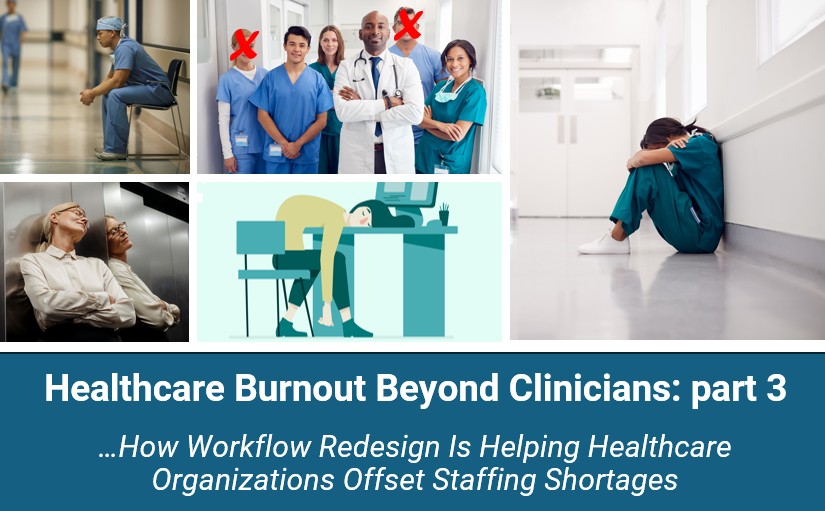
- The Healthcare Burnout Backlash (pt 3): How Workflow Redesign Is Helping Healthcare Organizations Offset Staffing Shortages
- BD Announced Application of CE Mark for the Liverty TIPS Stent Graft

- BD Announced Application of CE Mark for the Liverty TIPS Stent Graft
- Blackstone and TPG Complete Acquisition of Hologic; Names New CEO
- Blackstone and TPG Complete Acquisition of Hologic; Names New CEO
- Endospan Receives FDA Approval for the NEXUS Aortic Arch Stent Graft System
- Endospan Receives FDA Approval for the NEXUS Aortic Arch Stent Graft System
- InVera Medical Receives FDA Clearance for Non-Thermal Chronic Venous Disease Device

- InVera Medical Receives FDA Clearance for Non-Thermal Chronic Venous Disease Device
- Starting material sourcing bottlenecks increase US drug shortage risks: report
- Novartis cuts 114 more jobs at New Jersey HQ as restructuring rolls on
- Charles River flows into Boston to help AHA bridge cardiovascular health divide
- Your Brain Cares If Your Plant-Based Diet Is Unhealthy, Researchers Report
- Your Neighborhood Might Help Make You Old Before Your Time
- Heavy 'Forever Chemical' Exposure Before Birth Increases Childhood Asthma Risk, Study Finds
- High-Tech Magnets Offer New Hope for Veterans Battling Combat PTSD
- Early Diagnosis Key To ADHD Child's Academic Success, Study Finds
- Study Reveals Who Americans Think Should Pay for Elder Care
- Envision hires ConcertAI, IQVIA alum Nick Jones as its med comms president
- The top 10 pharma R&D budgets of 2025
- For Many Patients Leaving the ICU, the Struggle Has Only Just Begun

- Watch: As AI Makes More Health Coverage Decisions, the Risks to Patients Grow

- Bial launches ‘Dialogues with Parkinson’s’ campaign aimed at identifying early symptoms
- Novartis pumps up community health footprint to tackle heart disease and cancer
- Abbott survey finds ‘information overload, confusion and cost’ affecting health choices in US
- FDA accuses Amneal, BioCorRx of producing ‘false and misleading’ drug promos
- North Carolina provider launches mobile opioid treatment unit
- U of Pittsburgh debuts online infant mental health certificate
- Emerging DSO lands Ohio partnership
- Heartland Dental added 5 de novos in March
- Florida International U, medical school land $30M gift for medical center
- Stanford Health, Alameda Health System partner to support California hospital
- The states with the highest, lowest migration rate of dentists since 2019
- What the Health? From KFF Health News: Abortion Pills, the Budget, and RFK Jr.
- Specialty DSO eyes new growth levers after entering several states
- Hospital M&A roars back to life in Q1 2026; Operating performances fray in February
- Epic rolls out health alerts to flag rising rates of illness at the county level
- Fierce Pharma Asia—Takeda-Denali split-up; Merck, Zhifei's revised deal; Shionogi's made-in-US plan
- Brain Scans Reveal How Psychedelics Change Perception
- Benefits leaders report increased operational, financial costs amid 'digital health vendor sprawl': Solera survey
- Vanda initiates study of motion sickness drug Nereus in GLP-1 users
- Judge Allows Abortion Pill, Mifepristone, To Continue Being Mailed for Now
- Bangladesh Measles Outbreak Kills 100+ Kids, Emergency Shots Begin
- Regulatory burdens continue to mount for physician practices
- Medicare navigation company Chapter banks $100M series E funding round
- Hair Growth Product, Tuymec Minoxidil Hair Growth Kits, Recalled Over Child Poisoning Risk
- Garda snaps up Assertio and chemo infection treatment Rolvedon in $125M deal
- AbbVie challenges 'outdated' 340B drug discount program guidance in new lawsuit
- AbbVie challenges 'outdated' 340B drug discount program guidance in new lawsuit
- Eli Lilly launches oral GLP-1 drug across US through Lilly Direct, telehealth providers
- Humana, Noom and Welldoc team up with b.well to expand health data access as part of CMS push
- America's Sexual Health Report Card Contains Some Surprises
- Years of Excess Weight, Not One Bad Checkup, Drive Heart Disease Risk
- There Are No Good Ways To Avoid Childhood Eczema But Many Treatment Options
- More Children, Teens At Risk From E-Scooter Crashes, Study Finds
- This Treatment Can Improve Your Odds Of Surviving C. Diff Infection
- Alzheimer’s Tests May Mask Risks for Women
- RFK Jr. launching health podcast to expose ‘hypocrisy’ and ‘corruption’
- RFK Jr. launching health podcast to expose ‘hypocrisy’ and ‘corruption’
- Advocate Health improves to 4% operating margin, $4.6B bottom line across 2025
- States Face Another Challenge With Medicaid Work Rules: Staffing Shortages

- Farm Bureau Health Plans Beat the ACA on Prices With an Age-Old Tactic: Rejecting Sick People

- Avalyn plans IPO to fund phase 3 trials of inhaled versions of approved respiratory drugs
- Judge rules that HHS must face states' lawsuit over RFK Jr.'s agency overhaul, massive layoffs
- Judge rules that HHS must face states' lawsuit over RFK Jr.'s agency overhaul, massive layoffs
- Consumers' satisfaction with health plan apps improves with familiarity: JD Power
- Nurses' job satisfaction stumbles after post-pandemic gains: survey
- Amazon launches 2 new digital health partnerships for nutrition therapy, sleep care in health conditions program
- Former NFL Star Steve McMichael Diagnosed With CTE After His Death
- Steven Ubl set to depart after more than a decade as CEO of PhRMA
- Nixing prior auth, outlier hospital bills could lower health costs, Center for American Progress' policy plan says
- Shionogi nabs initial $119M award from BARDA to establish US antibiotic plant
- More Drugmakers Join TrumpRx
- Graco Recalls Infant Car Seats Over Structural Issue
- Orlando Health fleshes out Alabama footprint with another acquisition
- US adults still turn to providers for accurate health information even as AI chatbot use grows: Pew survey
- Pfizer walks away from 'underutilized' office space in South San Francisco, transitions employees to remote roles
- Biogen settles investor lawsuit over its messaging on failed Alzheimer's drug Aduhelm
- Digital health startups raked in $4B during Q1 with 12 megadeals driving investment: Rock Health
- New Cervix-On-A-Chip May Revolutionize STI Treatment
- Long COVID Linked to Heart Health Risks
- The Flu Vaccine Can Lower Your Risk Of Heart Attack And Stroke — Even If You Wind Up Infected
- Herbal Drug Kava Poses Increasing Health Threat In U.S., CDC Warns
- Preschoolers' Solitary Screen Time Could Mean Behavior Problems, Language Difficulties Later On
- Combo Heat Waves/Droughts Will Affect Billions A Year By 2100, Researchers Project
- Amgen CEO netted $24.7M pay package in ‘25 as company’s upward trajectory continued
- J&J's Tremfya retakes TV drug ad spending crown from AbbVie
- Trump’s Personnel Agency Is Asking for Federal Workers’ Medical Records
- Urgent Care Clinics Move To Fill Abortion Care Gaps in Rural Areas

- FDA Approves First Generic Farxiga (dapagliflozin) Tablets
- Reliance on EHR vendors' tech roadmap slows down AI progress, senior IT leaders say
- ¿Puedo decirle a mi médico que no quiero que use la inteligencia artificial para tomar notas?



It appears that the U.S. House of Representative will vote on PPACA premium support subsidies, and a lot of other crap. 218 members have signed Discharge Petition 10 to remove the Obamacare subsidy bill from all committees. A normal discharge petition removes a House Rule from a committee and sends it directly to the Rules Committee or the floor for consideration.
This discharge petition puts House Resolution 780 on the floor. H. Res. 780 is remarkable in that it makes dramatic changes in the rules for H.R. 1834, which is the object of the Democrats' desire. H.R.1834, the Breaking the Gridlock Act, is quite the grab bag and will do all kinds of things totally unrelated to healthcare. H. Res. 780 specifically prevents removing all the garbage from H.R. 1834 on the floor. H.R. 1834 becomes an all or nothing proposition. The media will never explain this to the public, probably because they are not smart enough to understand what is taking place.
Expect a Trump veto, if this legislative fraud passes the House and Senate:
Moderate US House Republicans join Dems to force vote on extension of health care subsidies
By Jennifer Shutt and Shauneen Miranda - December 17, 2025WASHINGTON — Republican leaders in the U.S. House who have struggled to come up with a way to address spiraling health insurance costs will face a floor vote in early 2026 on Democrats’ plan to extend enhanced Affordable Care Act tax credits for three more years.
The House vote on that legislation will be required after a handful of moderate Republicans signed on to a discharge petition Wednesday morning. Their dissent with leadership sent a strong signal they are frustrated with the majority’s policies and the rising cost of health care for their constituents.
Speaker Mike Johnson, R-La., said after a morning vote series on the floor, where he was seen in a heated exchange with Republican Rep. Mike Lawler, that the two “just had some intense fellowship” and “it’s all good.”
Lawler is one of the four centrist Republicans who signed the discharge petition, putting it over the threshold of 218 to force a vote on the legislation.
“We’re working through very complex issues as we do here all the time,” Johnson said. “Everybody’s working towards ideas — we’re keeping the productive conversation going.”
The speaker also mounted his own defense, saying he has “not lost control of the House.”
That chamber has seen chaos and intraparty divides in the aftermath of the government shutdown, when Johnson opted to send lawmakers home for nearly two months.
“We have the smallest majority in U.S. history,” Johnson said. “These are not normal times — there are processes and procedures in the House that are less frequently used when there are larger majorities, and when you have the luxury of having 10 or 15 people who disagree on something, you don’t have to deal with it, but when you have a razor-thin margin, as we do, then all the procedures in the book people think are on the table, and that’s the difference.”
Senate approach
Senate Majority Leader John Thune, R-S.D., said he hadn’t yet decided whether to put the House Democrats’ bill on the floor if it is passed and arrives.
“Well, we’ll see. I mean, we obviously will cross that bridge when we come to it,” Thune said. “Even if they have a sufficient number of signatures, I doubt they vote on it this week.”
Thune said the discharge petition on the three-year ACA tax credits extension is far different from the discharge petition that forced a House floor vote on a bill to require the release of the Epstein files. Files related to Jeffrey Epstein, who died in jail in 2019 awaiting federal trial on sex trafficking charges, have become a target of Congress and victims in recent months.
“That came over here pretty much unanimously, 427 to 1,” Thune said.
“And my assumption is this discharge petition is going to be a very, probably, partisan vote.”The Senate voted earlier this month on Democrats’ three-year ACA tax credits legislation, a move that Thune agreed to in order to get enough Democratic votes to end the government shutdown. That bill, which is identical to the House version, was unable to get the 60 votes needed to advance on a 51-48 vote.
Both chambers are set to leave Capitol Hill later this week for their two-week winter break and won’t return to work until the week of Jan. 5.
Frustration breaks through
The House is scheduled to vote later Wednesday on Republican leaders’ own health care bill, after the chamber voted 213-209 to approve the rule that sets up debate on the legislation.
The bill, which Johnson released Friday evening, doesn’t extend the enhanced ACA marketplace tax credits that Democrats originally created during the coronavirus pandemic. The enhanced credits are set to sunset at the end of this month.
Johnson decided Tuesday not to allow the House to debate any amendments to the bill, blocking moderate Republicans from having their bipartisan proposal to extend the ACA marketplace tax credits with modifications taken up.
That led to considerable frustration, and Wednesday morning, Pennsylvania Republican Reps. Brian Fitzpatrick, Rob Bresnahan and Ryan Mackenzie, along with New York’s Lawler, signed the Democrats’ discharge petition, putting it at the 218 signatures needed to force a floor vote in that chamber.
“We’ve worked for months with both parties, in both chambers, and with the White House, all in good faith, to balance all equities and offer a responsible bridge that successfully threaded the needle,” Fitzpatrick wrote in a statement.
“Our only request was a Floor vote on this compromise, so that the American People’s voice could be heard on this issue,” Fitzpatrick added. “That request was rejected. Then, at the request of House leadership I, along with my colleagues, filed multiple amendments, and testified at length to those amendments. House leadership then decided to reject every single one of these amendments. As I’ve stated many times before, the only policy that is worse than a clean three-year extension without any reforms, is a policy of complete expiration without any bridge. Unfortunately, it is House leadership themselves that have forced this outcome.”
Jeffries introduced petition
The discharge petition, introduced last month by House Democratic Leader Hakeem Jeffries, sat just below the signatures needed for weeks as centrist Republicans tried to broker a deal that could become law.
When that logjam broke with the moderates’ signatures, it set up a House floor vote, but any legislation must move through the Senate as well and gain President Donald Trump’s signature.
Without a law to extend the enhanced ACA marketplace subsidies, roughly 22 million Americans will see their health insurance premiums spike by thousands of dollars next year, if they can fit the rise in costs into their budgets.
Speaker Johnson has refused to put House Resolution 780 on the floor before the holiday recess. He will do so after the 119th U.S. Congress reconvenes in 2026. A vote is expected during the week of January 5th - probably on the 7th or 8th.
U.S. House Resolution 780 passed yesterday, 221 to 205. This will force a vote on H.R.1834, the Breaking the Gridlock Act, shortly:
https://thehill.com/policy/healthcare/5678236-house-republicans-obamacare-subsidies/
These nine Republicans back Democrats’ effort to revive ObamaCare subsidies
By Ryan Mancini - January 7, 2026Nine House Republicans voted on Wednesday to compel the lower chamber to vote on a Democratic bill to revive ObamaCare subsidies after they expired at the start of the new year.
Republican Reps. Mike Lawler (N.Y.), Nicolas LaLota (N.Y.) Robert Bresnahan (Penn.), Brian Fitzpatrick (Penn.), Ryan Mackenzie (Penn.), María Elvira Salazar (Fla.), Max Miller (Ohio), David Valadao (Calif.) and Thomas Kean (N.J.) voted with all 212 House Democrats.
The House will vote on final passage on Thursday.
The bill is not expected to pass in the Senate, but a bipartisan group of senators is working on a compromise bill that would still extend subsidies, Politico reported. Sen. Bernie Moreno (R-Ohio) said the bill text could be released as early as Monday.
Sticking points with the bill continue to plague its progress. Moreno said one of its issues is that under the deal, people would pay a $5 minimum monthly premium at the low end, and anyone earning more than 700 percent of the federal poverty level would be excluded. Sen. Ron Wyden (D-Wyo.) called it a “rate hike.”
Health care subsidies remain a sticking point on Capitol Hill amid federal funding talks, all of which led to the longest government shutdown in modern U.S. history back in October. Democratic lawmakers could again use Affordable Care Act (ACA) subsidies as leverage if it is not resolved before a funding bill is passed.
Rep. Juan Vargas (D-Calif.) previously told The Hill he thinks there should be another shutdown if there’s no agreement on ACA subsidies.
“I mean, we can’t kick all of these people off of their health care plans because they can’t afford them,” Vargas said. “That’s outrageous.”
The U.S. House passed H.R.1834, the Breaking the Gridlock Act, this afternoon 230 to 196. Not a veto proof margin. It now goes to the Senate where its future is uncertain:
https://thehill.com/homenews/house/5680184-obamacare-tax-credits-bill-passes-house/
House passes extension of ObamaCare subsidies as moderates seek compromise
By Mike Lillis, Nathaniel Weixel and Emily Brooks - January 8, 2026The House on Thursday passed legislation to revive and extend expired ObamaCare tax credits in a bipartisan vote that is boosting hopes of centrist Republicans for a bipartisan deal to revive the tax credits.
The tally, 230 to 196, highlighted the tenuous grip Speaker Mike Johnson (R-La.) has over his restive GOP conference. Seventeen centrist Republicans crossed the aisle to join every voting Democrat in support of the measure.
The measure, which would extend the enhanced Affordable Care Act (ACA) subsidies for three years originally passed in response to COVID-19, now heads to the Senate, which defeated the same proposal last month in a largely partisan vote. Indeed, Senate Majority Leader John Thune (R-S.D.) has suggested he’ll ignore the House bill altogether.
Still, lawmakers think it could light a fire and pressure the bipartisan Senate group working to reach a bipartisan deal.
Negotiators from both parties in the Senate, who revived compromise talks in response to centrist Republicans forcing the vote in the House, have said they are close to a deal to bring back the tax credits, which expired at the end of 2025, and extend the open enrollment period.
“We want to show momentum coming out of the House today,” said Rep. Tom Suozzi (D-N.Y.), who has been working with GOP moderates on the subsidy extension plans. “And the Senate is very far along on finding an agreement on their side.”
Rep. Brian Fitzpatrick (R-Pa.), who huddled with bipartisan Senate negotiators Thursday, said the vote should be a pressure point for the Senate.
“Senators made it abundantly clear that, but for this action in the House … that that was incredibly important for them to breathe life back into this issue and really force the Senate to take this up,” Fitzpatrick told reporters.
Passage in the House marked a major victory for Democrats and the handful of centrist Republicans who had bucked their leadership to endorse a procedural gambit, known as a discharge petition, that forced the bill to the floor over the opposition of Johnson and other GOP leaders.
It was an extraordinary demonstration of defiance, because discharge petitions are rarely successful. And the vote was particularly notable because it centered around ObamaCare, which Republicans have sought to dismantle since its very inception in 2010.
Heading into the vote, Democratic leaders in both chambers were already calling on Thune to bring the proposal to the floor again, predicting the House vote would be enough to compel more Senate Republicans to drop their opposition.
“American people should ask Leader Thune: Are you willing to put this bill that the House now is moving forward on, on the floor of the Senate? Because it will pass,” Senate Minority Leader Chuck Schumer (D-N.Y.) said on Thursday, hours before the House vote. “And that is the way to get this done.”
Yet even some of the most vocal supporters of the ACA subsidies say the House bill is dead in the water when it’s sent to the Senate.
“The three-year extension is never going to become law. We know that. The Senate already voted on it. They voted it down,” said Rep. Mike Lawler (R-N.Y.), one of the four Republicans who endorsed the Democrats’ discharge petition forcing Thursday’s House vote. “So the question becomes, procedurally, how do you actually get to a compromise?”
Many Republicans remain opposed to reviving the tax credits at all, seeing them as unnecessarily expensive. Indeed, the Congressional Budget Office on Thursday said the three-year extension would cost $80 billion.
The centrist Republicans supporting the subsidy extension made clear that they have plenty of problems with the underlying benefits; they want to alter the program to tighten the income eligibility limits and tackle fraud.
The bipartisan deal emerging in the Senate would extend the enhanced subsidies for two years, along with an income cap and language requiring a minimum premium of $5 a month to eliminate the $0 premium plans Republicans say are rife with fraud. It also would give patients the option of receiving funding in a health savings account.
But with millions of people poised to see a spike in health care costs in the early months of this year, those Republicans — many of whom are in competitive midterm races — also felt they had to step in to protect their constituents.
Another major sticking point are demands from conservative Republicans, who have never supported ObamaCare, to increase restrictions against ObamaCare health plans covering abortion.
President Trump gave fuel to GOP moderates’ hopes of overcoming the impasse on abortion and striking a bipartisan deal when he pleaded in a speech to House Republicans on Tuesday to be “flexible on Hyde” — in reference to the Hyde Amendment, which prevents federal funds from directly paying for abortion — when talking about health care.
The Hyde amendment does not prohibit Affordable Care Act plans from covering abortions, so long as there are no federal dollars being used for that coverage.
The law has a mechanism that segregates taxpayer money, and any plan that covers abortion needs to charge each enrollee $1 per month extra.
But anti-abortion activists and Republicans argue that current law does not sufficiently prevent federal funds from subsidizing health plans that cover abortion in some states.
Lawmakers involved in the negotiations have acknowledged that Hyde remains a sticking point.
“I think all the other things can be resolved,” Fitzpatrick said, but Hyde is “really the toughest for them to navigate.”
But he said there is a growing consensus not to add any additional restrictions, and reinforce the existing law.
Still, he added that Should the Senate, in your view, should the Senate avoid allowing Hyde
“This is an affordability issue. That’s how it should be viewed. Health care affordability, and I don’t think Hyde has any place in this.”
Get MHF Insights
News and tips for your healthcare freedom.
We never spam you. One-step unsubscribe.
Sponsors
Friends of MHF





Kirsten DeVries
Tom & Karen Nunheimer
Steve Ahonen
Ron & Faith Bosserman
Marlin & Kathy Klumpp
Sign Up for MHF Insights to keep up on the latest in Michigan Health Policy