








Michigan healthcare freedom community forum

Some real doozies this week. Commentary below.
Thursday, October 5, 2023
TIME: 10:30 AM
PLACE: Room 519, House Office Building, Lansing, MI
AGENDA:SB 384 (Sen. Hertel) Insurance; insurers; denying or limiting insurance to living organ donors; prohibit.
HB 4101 (Rep. VanderWall) Health occupations; speech-language pathologists; temporary licensing of speech-language pathologists; modify.
HB 4213 (Rep. Morse) Mental health; code; definition of distant site for a telemedicine visit; provide for.
HB 4579 (Rep. Price) Insurance; health insurers; reimbursement rate for telehealth visits; require to be the same as reimbursements for office visits.
HB 4580 (Rep. Brabec) Human services; medical services; reimbursement rate for telehealth visits; require to be the same as reimbursements for office visits.
HB 4131 (Rep. Liberati) Insurance; health insurers; coverage for health care services provided through telemedicine; modify.
HB 4504 (Rep. Fitzgerald) Health occupations; physical therapists; physical therapy licensure compact; enact.
HB 4505 (Rep. Zorn) Health occupations; physical therapists; licensing process; modify to incorporate physical therapy licensing compact.
HB 4169 (Rep. Rogers) Health occupations; occupational therapists; occupational therapy licensure compact; enact.
HB 4170 (Rep. Wozniak) Health occupations; occupational therapists; licensure process for occupational therapists; modify to incorporate occupational therapy licensure compact.OR ANY BUSINESS PROPERLY BEFORE THIS COMMITTEE
To view text of legislation go to: http://www.legislature.mi.gov/mileg.aspx?page=CommitteeBillRecord
Committee Clerk: Melissa Sweet
Phone: (517) 373-5176
e-Mail: msweet@house.mi.gov
Background on select bills in the order listed:
Speech language pathologists (SLP) help kids with speech impediments, adults with speech/swallow problems after stroke, and much more. There's a shortage of SLPs, bad enough that the ones in training can't get enough hours of supervision to go independent. This bill attempts to fix the problem by extending temporary licenses, multiple times if necessary. I've written before about the false promises of licensing. This is yet another example of a profession that should never have been licensed at all.
Telehealth: Can anyone give one sound, care-based reason Michigan law should control this, instead of leaving it to the market?? Where is the evidence that patients and clinicians are incompetent to find the best telehealth service for their needs and budget, the best way to use it, and whether insurance should cover it??
License Compacts: I testified and wrote about these bureaucratic, globalizing, and unconstitutional schemes when Michigan proposed one for nurses.
The PT and OT Compact bills passed committee with an H1 substitute on Oct 12. Language changes will not be available until the House floor vote occurs and is recorded.

The Michigan House approved House Bills 4504 and 4505 to enter Michigan into the Physical Therapy Licensure Compact:
https://www.thecentersquare.com/michigan/article_b952aaca-0952-11ef-811b-5bf7e32a17e6.html
Michigan House OKs bills to enter physical therapist compact
By Scott McClallen | May 3, 2024(The Center Square) – The Michigan House approved bills to allow physical therapists to practice in states that have entered a compact.
House Bills 4504 and 4505 aim to enter Michigan into the Physical Therapy Licensure Compact, which allows physical therapists to practice physical therapy in states within the compact without having to be licensed in each state.
HB 4504 would make Michigan a party to the PTLC, and HB 4505 would make related changes to the code’s physical therapy licensure provisions.
Republican Reps. Doug Wozniak, of Shelby Township, and Dale Zorn, of Onsted, sponsored the bills.
“These interstate compacts will improve access to health care in Michigan while maintaining our state’s regulatory authority to protect the health and safety of our residents,” Zorn said in a statement. “This legislation would also help fill the need for physical therapists specializing in critical areas of care, such as chronic pain, oncology rehabilitation, and more.”
Currently, 28 states are part of the OT compact, while 34 states are a part of the PT compact, including Michigan’s neighboring states of Indiana, Ohio and Wisconsin. Several additional states also have similar legislation to enter the compacts as well.
To enter the compact, a state must use a recognized national examination for licensure, require continuing competence requirements, participate in the data system, and run FBI background checks on license applicants.
Officials can investigate complaints and remove licensees for violating rules.
The compact aims to increase access to telemedicine services by allowing workers to get multistate licensure.
“Occupational therapists go through rigorous education and training to receive their professional licenses,” Wozniak said in a statement. “It’s common sense to allow these qualified professionals to provide in-person and online services throughout the country.”
Officials in each state oversee the compact’s licensure data system, allowing for instantaneous verification of licensure information.
The Michigan House is also considering similar legislation introduced earlier this year to enter the state into a similar multistate licensure compact for physician’s assistants.
Compacts give us more centralized, bureaucratic control over clinicians.
At the other extreme is license reciprocity.
For some reason, Michigan only proposes the simple, no-cost version for Canadians.
Legislators should view telehealth bills with a high degree of skepticism. Several reasons exist for this.
Telehealth regulation tends to be highly specific - too specific to allow much innovation, or competition. Which is probably the point, since most such proposals come from within the industry. Like most industries, telehealth pays lobbyists for one reason: profits and marketshare are top of mind.
Telehealth is a big deal, especially since COVID. Where big money is, vultures will gather.
Case in point, via the US DOJ.
Telemedicine Company Owner and Author of Health Care Compliance Books Sentenced for $136M Medicare Fraud Scheme
Tuesday, June 30, 2026
For Immediate Release
Office of Public Affairs
The owner of two telemedicine companies was sentenced today to 120 months in prison and ordered to pay $66 million in restitution for her role in a scheme to fraudulently bill Medicare for medically unnecessary durable medical equipment and prescription drugs.
According to court documents and statements made in court, Jean Wilson, 54, of Richmond Hill, Georgia, is a licensed nurse practitioner who owned and operated two telemedicine companies between 2017 and 2019. Through these companies, Wilson and others paid illegal kickbacks to medical providers to sign orders for orthotic braces and prescriptions for pharmaceutical drugs for Medicare beneficiaries, even though the beneficiaries did not need the braces or drugs. Wilson signed many of the prescriptions herself.
“The defendant—a nurse practitioner responsible for the care and safety of her patients—exploited our health care system, conspiring to submit over $136 million in false and fraudulent claims to Medicare,” said Assistant Attorney General Colin M. McDonald of the Justice Department’s National Fraud Enforcement Division. “Today’s lengthy sentence underscores the Fraud Division’s commitment to fighting fraud at every turn to restore public trust in our institutions. We will work tirelessly to hold corrupt medical professionals accountable and recover stolen taxpayer dollars for the American people.”
After acquiring the signed orders and prescriptions, Wilson and others illegally sold them to purported marketing companies for approximately $90 per Medicare beneficiary. The marketing companies often re-sold the orders to brace companies and pharmacies, which in turn submitted claims for medically unnecessary braces and drugs to Medicare. Wilson and her coconspirators at marketing companies pressured Medicare beneficiaries into accepting as many braces as possible, and evidence showed that practitioners working for Wilson signed orders for four or more orthotics per beneficiary for over 3,000 beneficiaries. In fact, over 40 beneficiaries received orders for ten or more orthotics. Wilson attempted to conceal her conduct by using shell accounts and putting in place nominee owners for her companies, including using a member of Wilson’s church to open a bank account in the name of one of her telemedicine companies. During the conspiracy, Wilson and others submitted over $136 million in false and fraudulent claims to Medicare, of which Medicare paid over $66 million. Wilson and her husband Reinaldo Wilson, who was previously sentenced to 7 years for his involvement in the conspiracy, used illicit proceeds from the scheme to purchase luxury vehicles, including multiple Rolls-Royces.
After her arrest and indictment, Wilson held herself out as a “Medical Professional Legal Consultant” and authored multiple books on health care compliance. In her book, “Avoiding Health Care Pitfalls,” Wilson warned, “Some entities and individuals will try to use you as a way to make them millions!”
Wilson pleaded guilty in March 2024 to conspiracy to commit wire fraud and health care fraud.
Assistant Attorney General Colin M. McDonald of the Justice Department’s National Fraud Enforcement Division; Special Agent in Charge Stefanie Roddie of the FBI Newark Field Office; and Special Agent in Charge Naomi Gruchacz of the U.S. Department of Health and Human Services Office of Inspector General’s (HHS-OIG) New York Regional Office made the announcement.
FBI and HHS-OIG investigated the case.
Trial Attorneys Darren C. Halverson and Nicholas K. Peone of the Criminal Division’s Fraud Section prosecuted the case.
On April 7, the Department of Justice announced the creation of the National Fraud Enforcement Division (Fraud Division). The Fraud Division is laser-focused on investigating and prosecuting those who commit fraud against the American people. The Department’s work to combat fraud supports President Trump’s Task Force to Eliminate Fraud, a whole-of-government effort chaired by Vice President J.D. Vance to eliminate fraud, waste, and abuse within Federal benefit programs.
The Fraud Section leads the Criminal Division’s efforts to combat health care fraud through the Health Care Fraud Strike Force Program. Since March 2007, this program, currently comprised of eight strike forces operating in federal districts across the country, has charged more than 6,200 defendants who collectively billed federal health care programs and private insurers more than $45 billion. In addition, the Centers for Medicare & Medicaid Services, working in conjunction with the Office of the Inspector General for the Department of Health and Human Services, are taking steps to hold providers accountable for their involvement in health care fraud schemes. More information can be found at www.justice.gov/criminal-fraud/health-care-fraud-unit.
Updated July 1, 2026
Rural Health Transformation Program (RHTP) funds offer options for Michigan rural hospitals.
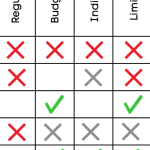
A new telehealth freedom study takes off from the RHTP potential, measuring the 50 states in four key areas.
- modality neutral
- start telehealth by any mode
- no barriers to across state line telehealth
- independent practice
Pioneer/Cicero Institute published its State Policy Agenda for Telehealth Innovation 2026 Update. It comes in at 20 pages long, but not difficult read.
Spoiler alert: Michigan fares poorly: #15 from the bottom, with a "D" letter grade.
I've bold-fonted Michigan-specific points and clipped for length; worth a visit to the PDF for its excellent chart of state data and explanations.
<clip>
... Scope‑of‑practice changes can further extend telehealth’s reach when clinicians are allowed to practice independently at the top of their license and are clearly authorized to use telehealth modalities instate and across state lines. The RHTP specifically includes scope of practice for nurse practitioners and pharmacists in its technical scoring methodology, meaning that states can increase their federal funding by empowering these medical professionals to practice at the top of their training, and would also improve their grade in our future reports.
Finally, RHTP dollars will stretch further if states repeal or phase out payment‑parity mandates that require telehealth visits to be paid the same as in‑person care. The original rationale for parity was to help providers cover start‑up technology costs, but inexpensive telehealth tools are now widely available, and the RHTP itself offers substantial technology funding. CMS should signal that states are expected to move away from rigid parity requirements toward flexible payment models that reward value rather than visit type.
<clip>
Compacts Have Severe Limits
As we covered in past years' reports, compacts have severe limitations.
These include:
■ They Are Slow
To get passed, to get set up, and to get approved for the provider (depending
on the compact).
■ They Are Expensive
To get passed, to get set up, and for the providers to take part.
■ They Impact Fewer States
Limited only to providers in compact states.
■ They Are Too Narrow
Limited to one kind of provider type covered by that specific compact.<clip>
Get MHF Insights
News and tips for your healthcare freedom.
We never spam you. One-step unsubscribe.
Sponsors

J & DE Family Charitable Fund

Friends
of MHF

Kelly Grotendiek
Philip Harbach
Dale Johnson
Drs. Jeffrey and Joni Jones
Vickie Kahle
Tammy Kipen
Marlin & Kathy Klumpp
Melanie Kurdys
Ruth Nobel
Patrick Peterson
Stephanie Poortenga
Jeanne Smit
Ben and Hope Staal
John Tuinstra
Jacki VanHuis
Sandy Walker
Sign Up for MHF Insights to keep up on the latest in Michigan Health Policy