







Michigan healthcare freedom community forum

CMS released the final rules for able-bodied adults to work in order to qualify for Medicaid on June 1, with final deadlines for states. Some are rolling in the new provisions early.
Kaiser Family Foundation, a left-leaning West coast healthcare giant, breaks down the new rule's impact for patients with many source links and a map of US states according to Medicaid Expansion status.
Michigan, a Medicaid Expansion state, euphemized its program as "Healthy Michigan" under the Snyder Administration.
https://kffhealthnews.org/medicaid/medicaid-work-requirements-final-rules-exemptions-trump-cms/
Final Rules for Medicaid Work Requirements Are Out. Here’s What You Need To Know.
Sam Whitehead | June 12, 2026
This story also ran on States Newsroom. It can be republished for free.
The Trump administration has issued final rules on how states should ensure that millions of Medicaid enrollees prove they’re working or completing other activities, such as job training, volunteering, or being enrolled in an educational program.
The Centers for Medicare & Medicaid Services released the rules on June 1. That deadline was set last year in the GOP tax-and-spending law known as the One Big Beautiful Bill Act, which established a work requirement for certain people enrolled in Medicaid, the state-federal health insurance program for people with low incomes or disabilities.
Medicaid agencies are scrambling to rework IT systems and make sure they have staff to effectively enforce the rules, while also keeping enrollees from losing coverage for administrative reasons, such as difficulty navigating state eligibility portals.
The newly announced regulations offer a clearer picture of what roughly 18.5 million Medicaid enrollees will have to do to prove they qualify for benefits.
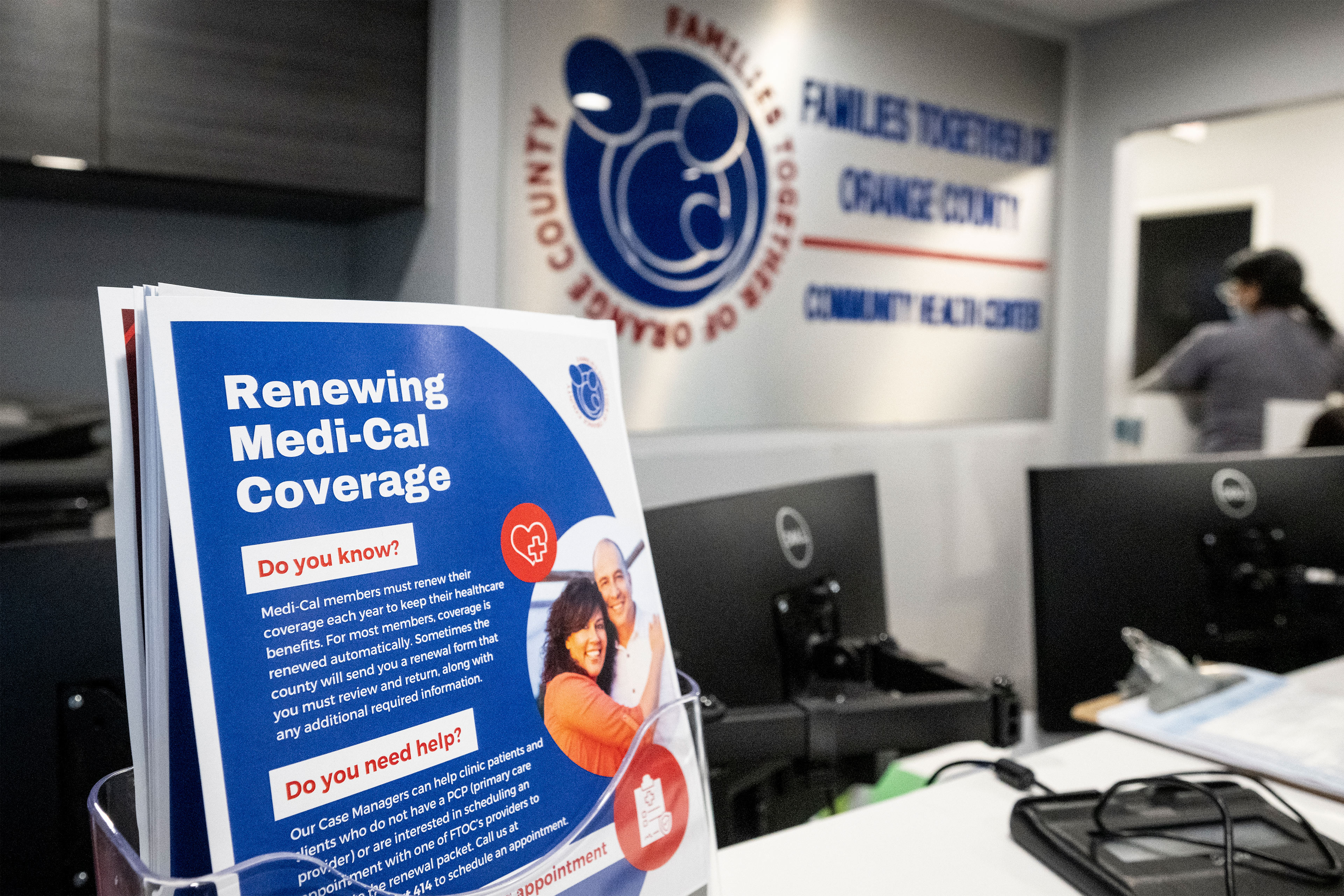
Jim Torres, who helps people enroll in health coverage at the Samuel U. Rodgers Health Center in Kansas City, Missouri, said a “very small percentage” of his clients have heard of the changes coming to Medicaid.
“These folks have very busy lives. They’re doing the best they can to get by,” he said. “It’s just not a top-of-mind thing for most of them.”
Health policy researchers and consumer advocates said enrollees should keep a few things in mind as the Jan. 1, 2027, rollout approaches in most states.
1. The work rules won’t apply to everyone.
The new rules will apply to people covered through what’s known as Medicaid expansion. Since 2014, more than 40 states and the District of Columbia have decided to allow more people into their Medicaid programs, generally low-income adults without dependents. Georgia and Wisconsin offer coverage to some people in this group, so they’ll be subject to the rules.
Children and pregnant people, as well as individuals with disabilities who receive Social Security payments — all groups that already qualify for Medicaid — won’t be subject to the rules. Nor will people determined to be “medically frail,” or too sick to work.
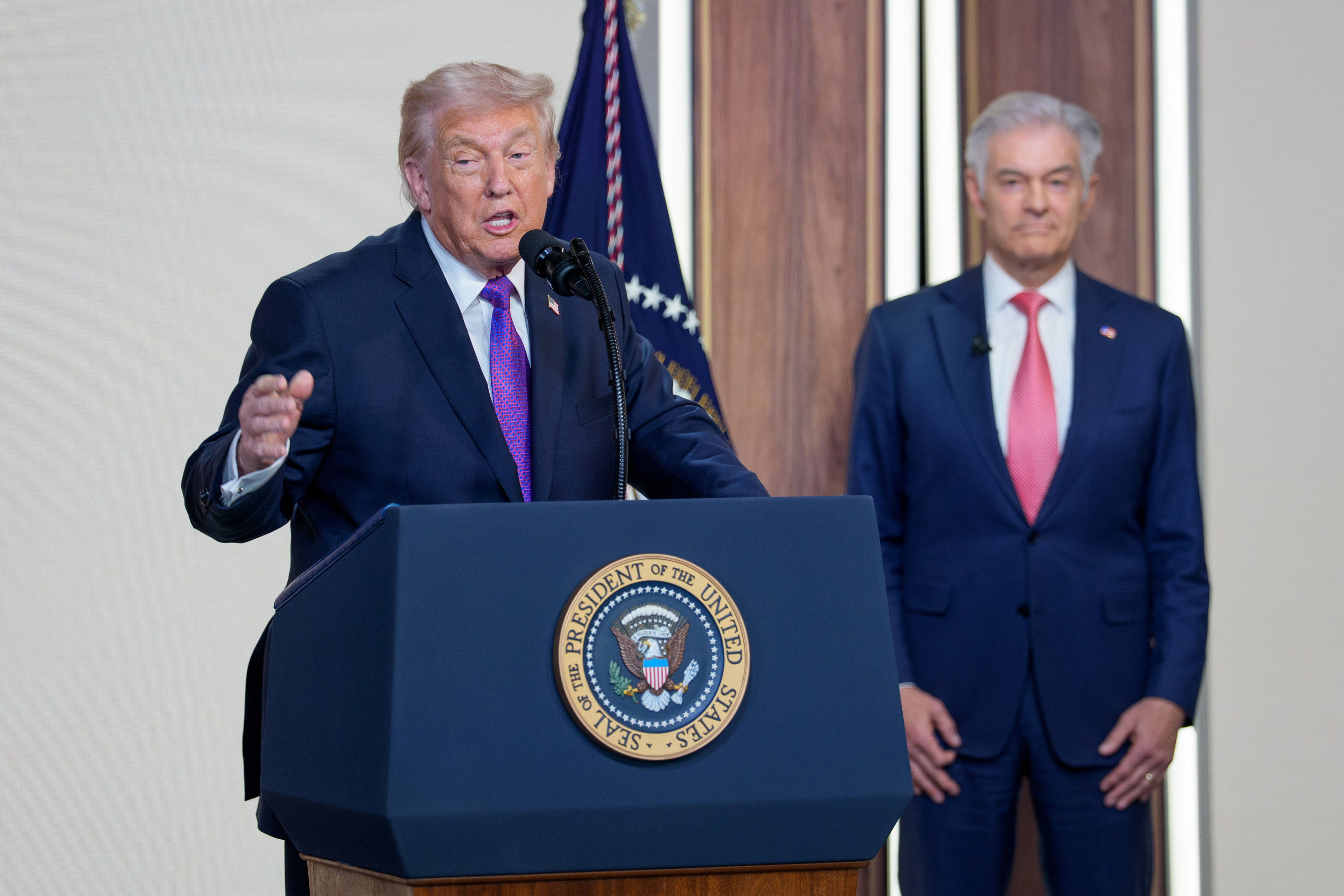
People subject to the work rules are “crowding out” people in the Medicaid program who are “truly in need,” CMS Administrator Mehmet Oz claimed during a June 1 press call. “Work requirements are going to turn this around, we hope.”
The rules are set to take effect in most places in January. Nebraska started enforcing them in May. Montana plans to start in July but won’t kick people off until October. Arkansas will do a “soft” launch in July — it will start enforcing the rules but with no penalties until next year.
2. States will take your word that you’re too sick to work. For now.
Federal officials have stressed that states should make the process of reporting hours and requesting exemptions as simple as possible for Medicaid enrollees by creating automated systems and using existing data sources, such as unemployment and education records.
If states cannot determine you’re performing 80 hours of qualifying activities a month using those data sources, you may be allowed to “self-attest” to that in 2027, health policy researchers said.
People will also be allowed to “self-attest” that they are too sick to work in 2027, and do so one time in 2028. Then states will start asking for proof, if they can’t find it through available data.
But after the initial rollout, the burden of proof is likely to still fall on many enrollees, said researchers and consumer advocates.
People may need to dig up pay stubs, medical records, and doctors’ notes and submit them for state review, said Morgan Henderson, who has studied Medicaid work programs in Georgia and Arkansas at The Hilltop Institute, a research center at the University of Maryland-Baltimore County.
“The higher this manual reporting burden, the less people are going to do it,” he said. “That means that we’re going to see coverage drop-offs.”
3. The rules are tougher than expected for people too sick to work.
One of CMS’ primary goals has been to “protect vulnerable populations” through “strong exemptions to make sure people who can’t reasonably be expected to work are not subject to the requirements,” Dan Brillman, a deputy administrator at the agency, said during the June 1 press call.
Consumer and patient advocates, however, said the final rules’ exemptions are more restrictive than expected. Enrollees will eventually have to provide documentation, such as a statement from a medical professional, to prove that a health condition keeps them from working. And each individual state will have to determine the severity of beneficiaries’ medical conditions.
“Someone could be medically frail in Nebraska but not medically frail in Delaware,” said Carolyn Sheridan, associate director of state policy for the National Organization for Rare Disorders, which lobbies for patients with rare diseases. She said her group had hoped the rules would offer a standardized definition of who counted as medically frail and not leave the decision up to states.
Trump administration officials have publicly crusaded against fraud in government health programs, such as Medicaid, and states could face financial penalties for incorrectly granting people exemptions from the work rules, said Jennifer Tolbert, who researches Medicaid at KFF, a health information nonprofit that includes KFF Health News.
“States may be more cautious,” she said. “That will likely lead to people losing coverage who may still be eligible.”
4. Only certain qualifying activities count.
Enrollees can satisfy the rules by working 80 hours a month. They can also be enrolled in college courses, volunteer through a community organization, or do “in-kind” work that doesn’t result in pay.
The rules set out, in detail, how many academic credit hours translate to 80 hours a month — students need to be enrolled in six credit hours per semester to meet the “half-time” requirement. An unpaid internship can count toward the 80 hours.
People can also prove they’re volunteering with “a document from a community service organization.”
Consumer advocates say it might be hard for people to obtain proof they’re performing these kinds of informal activities. But supporters of the rules say volunteerism can already be tracked.
“If you run into trouble with the law and the judge says, ‘Hey, you need some volunteering and community service to serve your time,’ there are already ways that we verify that,” said Niklas Kleinworth, who works on state health policy for the conservative Paragon Institute.
5. You have time to prepare.
Make sure your state Medicaid agency has your current mailing address and keep your eye on your mailbox, said researchers and consumer advocates. State Medicaid agencies must inform you in two ways if you’ll be subject to the rules — by either regular mail or email, and by one other form of communication, such as a text or phone call or by posting a notice online.
“The important stuff comes by mail,” Henderson said.
And check in with your state Medicaid agency, said researchers and advocates. Some states, including Arkansas, California, and Wisconsin, have already posted information about the work rules on their websites. If you can’t find what you’re looking for there, visit or call a local office. A caseworker should be able to tell you whether you’ll be subject to the rules.
“Get ahead of this,” said Joan Alker, who is executive director of the Georgetown University Center for Children and Families and studies Medicaid. “So that you don’t end up going to the pharmacy one day and they say, ‘Oh, you’re not insured anymore’ when you’re trying to get your prescriptions refilled.”
KFF Health News correspondent Samantha Liss and senior correspondent Rachana Pradhan contributed to this report.

Michigan AG Dana Nessel and her secret cabal of Democratic Attorneys General have filed suit against Medicaid work rules:
25 Democratic-led states sue Trump administration over Medicaid work requirements
By Anna Claire Vollers of Stateline - June 29, 2026Twenty-five Democratic-led states plus the District of Columbia have sued the Trump administration over its new work requirements for people who get their health insurance through Medicaid.
At issue is a “medically frail” designation that the states say is too narrow and will make it too difficult for ill and disabled people to remain on Medicaid.
They’re challenging the administration’s guidance on who can be exempt from the work requirements included in the so-called One Big Beautiful Bill Act, the broad tax and spending measure President Donald Trump signed a year ago.
Medicaid is the publicly-funded health insurance for people with low incomes. Under the One Big Beautiful Bill Act, states that have expanded Medicaid eligibility to more adults under the Affordable Care Act — 40 states plus the District of Columbia — must require those adults to prove they’re working, going to school or serving their communities for at least 80 hours a month to receive Medicaid. Georgia, Tennessee, and Wisconsin, which have used federal waivers to expand their Medicaid programs, are also subject to the new work rules.
The new lawsuit specifically targets new federal guidance that narrows the definition of who can qualify as “medically frail,” a key exemption used to excuse Medicaid recipients from work requirements if they have serious disabilities or illnesses. The guidance came in the form of an interim final rule published this month by the U.S. Department of Health and Human Services and the Centers for Medicare and Medicaid Services (CMS).
The Democratic attorneys general and governors who are plaintiffs in the suit claim the feds surprised them with this new rule months after they’d already been working with CMS on how to implement the work requirements.
“This eleventh-hour attempt to further narrow protections for medically frail Medicaid recipients seeks to punish those who cannot fend for themselves,” said Rhode Island Attorney General Peter Neronha, a Democrat, in a statement.
“Further, this Administration is once again attempting to sidestep Congress by unlawfully reinterpreting the law, and coercing the states to rush to implement their last-minute changes or face penalties,” he said.
To qualify as “medically frail” and therefore exempt from work requirements, the new guidance says, a Medicaid recipient must have a significant health condition and be significantly impaired in their ability to work. It’s a distinction the states say Congress did not make in the One Big Beautiful Bill Act.
The states also claim the new guidance violates federal law by ignoring evidence that work requirements cause people to lose coverage due to red tape.
For example, Arkansas tried instituting work requirements for Medicaid recipients in 2018, during Trump’s first term. A federal judge halted the policy less than a year later, after 18,000 adults had lost coverage. Studies later found that Arkansas’ work requirements didn’t increase employment. A recent analysis from the Urban Institute projects that 3-7 million people could lose coverage because of the new work requirements.
Supporters of the new work rules say they are sufficiently flexible and that the category of who qualifies as “medically frail” remains broad.
“This rule helps Americans build skills and independence through work, education, job training, or community service, creating new opportunities for themselves and their families,” said Dr. Mehmet Oz, director for the Centers for Medicare & Medicaid Services, in a statement earlier this month announcing the new guidance.
The lawsuit says states have already invested significant resources into implementing the new work requirements based on the original law’s language and prior federal guidance. They’re staring down an August 31, 2026, deadline for notifying Medicaid recipients about changes to the “medically frail” designation, a timeline the states say is not workable. They face financial penalties for not meeting the deadline.
States are expected to put the new work requirements into place by January 1, 2027, though the feds could choose to grant them temporary extensions through 2028.
The lawsuit was filed by the attorneys general of Arizona, California, Colorado, Connecticut, Delaware, the District of Columbia, Hawaii, Illinois, Maine, Maryland, Massachusetts, Michigan, Minnesota, Nevada, New Jersey, New Mexico, New York, North Carolina, Oregon, Rhode Island, Vermont, Virginia, Washington and Wisconsin, as well as the governors of Kentucky and Pennsylvania.
A long form update on the Medicaid work requirement conflict from Politico:
Trump and Democratic states clash in court over who’s too sick to work
Medicaid eligibility will soon hinge on how the government defines “medical frailty.”
By Alice Miranda Ollstein and Robert King - July 28, 2026Democratic attorneys general and the Justice Department are facing off for the first time in court Tuesday over the fine line between being sick and being “medically frail,” a distinction that could cost Medicaid recipients their health benefits.
At stake is a key part of a new Trump administration rule imposing work requirements on Medicaid, the state-federal health insurer for low-income people, starting in January. How a Boston judge comes down will determine who in Medicaid’s expansion population — typically low-income people without young children — must work, volunteer or go to school for 80 hours a month to keep their benefits.
Republicans in last year’s One Big Beautiful Bill Act set those work requirements, they said, as a way of ensuring the program remains on firm financial ground so it can serve low-income people who really need it. Democrats in Congress argued the work requirements would leave deserving people without health insurance in order to fund tax cuts for the rich. The debate is playing out in midterm campaigns, foreshadowing what figures to be a much larger fight in the 2028 presidential year, when the new rules will be in full effect.
The administration declared in an interim final rule released last month that a diagnosis, even for a disease as grave as cancer, isn’t enough to claim an exemption from the 80-hour requirement, unless beneficiaries submit additional proof that they physically can’t work. Democratic attorneys general from 25 states and Washington, D.C. plan to argue the rule is both too strict, in not offering blanket exemptions to people with certain diseases, and too vague, in failing to guide states on how to determine who is too sick to work — and will ask the judge to block the stricter medical frailty policy.
“This is one of those cases where it’s really hard to overstate how dire the consequences could be,” said North Carolina’s Democratic attorney general, Jeff Jackson, who has joined the lawsuit with other Democratic state officials challenging the policy. “You’re going to have 50 states doing 50 different things, and we’re all going to have to create a whole new bureaucracy. …You are talking about a lot more paperwork, more evaluations, more doctor visits, and a lot more work for doctors themselves.”
Imposing work requirements on the millions of Americans insured through Obamacare’s Medicaid expansion was one of the driving forces behind the One Big Beautiful Bill Act Republicans enacted in 2025 — predicted to save the federal government $385 billion over the next decade by reducing the number of people enrolled by roughly 5 million.
Before expansion, Medicaid primarily covered low-income single parents (mostly women), children, elderly people and people with disabilities. Expansion opened eligibility to anyone with household income below 138 percent of the poverty level — a new population of adults that many Republicans think should get their health insurance through a job rather than the government.
Most non-disabled adults on the Medicaid expansion are already working, according to an analysis of 2023 Medicaid data by the health research organization KFF. The remainder didn’t work for a variety of reasons, including 12 percent who were caregiving, 10 percent enrolled in school and 8 percent who were retired or unable to find work.
Republican state officials have largely embraced the new work requirements, with Nebraska and Montana moving ahead with implementation of the rules months before the Jan. 1, 2027 date Congress mandated.
The Trump administration is allowing people to self-attest that they are too medically frail to work for the first year of the program, and will only require proof beginning in 2028. What kind of proof, however, is an open question.
States are currently in talks with the federal health department about which methods of verifying a person’s medical condition will count under the new policy — whether, for instance, patients will need to get a doctor’s note testifying that their condition prevents them from working part-time, or whether the state can cobble together a formula from existing data sources to exempt patients who have a certain number of medical visits or drug prescriptions per year.
“We have states that have sent us their approach that we’ve sort of looked through. We want to make sure it aligns,” Caprice Knapp, the principal deputy director of the Center for Medicaid, said on a recent episode of the podcast for the nonprofit Center for Accountability, Modernization, and Innovation. “For folks who are already in the Medicaid system, where I have claims because I’ve gone to the doctor, maybe I have case notes from case management. There’s data that we have.”
The Centers for Medicare and Medicaid Services, the federal agency that includes the Center for Medicaid, declined to respond to a list of questions about its work with states to implement the rule, citing the ongoing litigation.
As states wait for the Trump administration to answer their questions on how to enforce the policy, doctors say they’re being inundated with questions they can’t answer from Medicaid patients who are scared of losing their insurance. They worry those queries will skyrocket next month when states are required to start reaching out to impacted beneficiaries to inform them about the incoming work requirements.
“They need to give us some very specific guidance,” said Barbara McAneny, an oncologist and CEO of an oncology practice in New Mexico who sees Medicaid patients. “If you have skin cancer are you medically fragile? And if you are a cancer survivor, you aren’t [in active treatment], but may have a disability from the treatment to cure you.”
McAneny said even though the rules don’t take effect in her state until January her staff has spent a lot of extra time helping patients figure out whether the rules apply to them and what they need to do to maintain coverage.
“There is going to be a lot of denials and fighting back,” she said. “It’s an unfunded, administrative burden.”
Marvin Figueroa, health secretary to Virginia’s Democratic governor, Abigail Spanberger, said in an interview that his team has been stuck on several aspects of implementation as they wait for more guidance and clarity from the Trump administration on what data sources they’ll be allowed to use to determine whether a person is sick enough to get an exemption. The goal, he said, is to make it as automatic as possible so that patients and doctors don’t have to slog through additional paperwork.
“We have about 11 different system upgrades that we need to make based on the information that we get from them on these definitional questions,” he said. “But even having that information and having a better understanding of the scope of what it entails doesn’t necessarily mean that we can just flip that switch. You can have the data systems and the infrastructure that is right, but then you also have to train people to be able to implement this new guidance.”
Should the Democratic attorneys general win a court injunction against the stricter medical frailty rule, Figueroa said it would provide “an opportunity for us to have more time to be able to work with CMS to be able to implement this in a way that is the least impactful for those people that may lose their coverage.”
‘Flying blind’
The Trump administration argued ahead of Tuesday’s court hearing that granting an exemption to the work requirement on the basis of a diagnosis alone would give too many people a pass who are physically capable of working, studying or volunteering.
Without stricter rules, they wrote in their legal brief, “many of the exclusions are broad and ambiguous. For example, does a person with a tobacco use disorder qualify as ‘medically frail’ because he has a ‘substance use disorder,’ even if he has no functional limitations whatsoever? Do asthmatics and diabetics have a ‘serious’ or ‘complex’ disorder if they are not functionally limited?”
In her agency’s podcast, Knapp also defended CMS’ decision to make every state come up with its own list of diagnoses that qualify someone for a medical frailty exemption. Nebraska, which began enforcing the rules earlier than Congress required, in May, created a 300-page list.
“Would it have been great if we could have produced a whole list for them? Sure, that would have taken us a lot longer than the deadline for putting out the [final rule],” Knapp said, referring to the law’s June 1 deadline to publish the rule.
CMS told POLITICO in June that the rule doesn’t make doctors responsible for determining if an individual must meet the work requirement, saying that responsibility lies with the state.
But Democratic state officials party to the lawsuit say they remain confused about how to make that call based on the data they can access, such as Medicaid insurance claims.
“Medical claims are able to tell you that someone received treatment. They don’t necessarily tell you whether that person is capable of working,” Figueroa said. “There’s a whole other set of policies and processes that you need to put in place to be able to make that determination.”
Meanwhile, groups that work with Medicaid patients worry that even with the ability to self-attest to medical frailty, poor communication from state and federal officials will mean many become uninsured.
“People just truly don’t know that that’s an option or how to go about that process,” said Sarah Maresh, the program director for health care access at Nebraska Appleseed, an advocacy group for low-income people.
Groups like Nebraska Appleseed and individual doctors are scrambling to create educational materials to make sure their patients understand what they need to do and when to avoid being booted from the rolls.
“I don’t want people to fall through the cracks,” said Kathy Oubre, CEO of the Pontchartrain Cancer Center in Louisiana.
One challenge, she and other physicians said, is figuring out which patients to educate. Some states, including Louisiana, do not give patients or providers information on whether someone gets their insurance through the expansion provided under Obamacare or qualified under the Medicaid eligibility rules that preceded the expansion: low-income parents, children, people with disabilities and seniors.
“We are completely flying blind,” said Oubre, who added her clinic is reaching out to all Medicaid patients to be safe.
‘A bad sign’
As they wait to hear whether the district court in Boston will halt enforcement of the medical frailty provision of the law, doctors and health officials around the country are closely watching Nebraska — which opted to start enforcing the rules in May and will begin dropping people from Medicaid at the end of July if they fail to prove compliance — for signs of the challenges they are likely to encounter next year.
Health care workers and patient advocates say the state’s rollout has been marked by mass confusion and a lack of transparency. State health officials, who previously held monthly meetings with patient and provider groups, have canceled all scheduled sessions since the May start date. Patients calling the health department with questions about their eligibility are facing wait times over an hour. Some have been told incorrect information by caseworkers. And pleas from hospital and physician groups for the state to publicly share data — on how many new Medicaid applicants are being denied because of the rules, how many have been approved, how many have been granted an exception for medical frailty or another reason — have been met with silence.
“We still have a fairly long list of questions that we don’t have answers to yet,” said Amy Behnke, the CEO of the Health Center Association of Nebraska, which oversees community health centers around the state that serve Medicaid enrollees and other low-income people.
“We don’t have good clarity on what level of [substance use disorder] treatment qualifies someone for an exemption,” she said. “If somebody is in a weekly outpatient treatment, does that count? Do they have to be fully inpatient? We don’t know. Similarly with the ‘temporary hardship’ exemption for people who have to travel outside of their community for care. Does somebody have to travel 100 miles? Do they have to cross state lines? At some of our rural health centers, we have patients who will drive two hours for health care. Does that count?”
Nebraska’s health department did not respond to questions about its outreach and implementation work.
Some experts see the state’s struggles as a cautionary tale for the rules’ upcoming national implementation.
“States are trying to figure out how to combine data sources — such as diagnoses and visits to the doctor or hospital — to identify who’s significantly impaired. That’s hard enough on its own. Doing it while building the operational capacity to act on it, on this timeline, is extremely challenging,” said Hannah Katch, a former senior adviser for the federal Centers for Medicare and Medicaid Services under President Joe Biden and a former leader of California’s Medicaid program.
“And if the first state out of the gate is struggling, that’s a bad sign for what happens when far more people start losing coverage in the months ahead.”
Clinton U.S. District Judge Richard J. Stearns (D. Mass.) refused to block Medicaid work rules as requested by Michigan AG Dana Nessel and her secret cabal of Democratic Attorneys General:
https://www.politico.com/news/2026/07/30/judge-declines-to-block-medicaid-work-rule-01016889
Judge declines to block strict work rule for sick patients on Medicaid
The case challenging Mehmet Oz's "faithfulness to Congressional intent” will continue.
By Alice Miranda Ollstein - July 30, 2026A federal judge has declined to stop the Trump administration from requiring that chronically ill Medicaid patients prove that they are physically unable to work in order to keep their insurance.
While the underlying case against the policy can continue, the ruling leaves the work requirement for low-income people on the program in place as states rush to meet a Jan. 1 implementation deadline.
Dozens of Democratic state officials sued over the policy, arguing that they are suffering irreparable harm by having to shell out millions to hire staff and set up new technology systems to verify which Medicaid patients are “medically frail” enough to qualify for an exemption.
Judge Richard J. Stearns, a Bill Clinton appointee, said late Wednesday night that’s not enough of a reason to block the rules before they take effect, citing the provision in Republicans’ One Big Beautiful Bill Act that requires the federal government to cover 90 percent of states’ implementation costs. And as for the “tight timeline” the states complain of, he added, that was set by Congress, not the Trump administration health officials they decided to sue.
“There is a certain point at which damages fail to justify the issuance of such an extraordinary measure,” he wrote. “Plaintiffs have not shown that their damages rise above that minimal threshold.”
The judge, however, denied the states’ injunction request without prejudice, meaning they can request an injunction again in the future if new evidence of harm arises as they implement the work requirement. He also stressed that their challenge may prevail down the road, noting that the case “presents difficult issues” and raises questions about Centers for Medicare and Medicaid Services Administrator Mehmet Oz’s “faithfulness to Congressional intent” when he wrote a stricter medical frailty rule than what Congress passed.
The Trump administration, which is counting on the work requirements to cut millions of people from the Medicaid rolls and free up hundreds of billions in federal funds over the next decade, is expected to keep defending the policy as these arguments on the merits proceed. That means states must prepare for the Jan. 1 implementation deadline.
Amid widespread confusion among state officials about how to determine who is too sick to work, volunteer or complete other “community engagement” activities for at least 80 hours each month, some state health departments are telling their residents that tens of thousands of people who get their insurance through Obamacare’s Medicaid expansion may need to present a doctor’s note to maintain their coverage.
That potential burden on already over-stretched physicians has alarmed the medical community, prompting several groups to plead with courts and federal agencies to stop the rule from taking effect.
America’s Physician Groups — a lobby arm representing more than 260,000 doctors and other clinicians — wrote to the CMS this week warning that the “extremely harmful” rule will force physicians to “sit as judge and jury on their [sick Medicaid patients’] ability to work” and “violate nearly every core principle of medical ethics.”
Other powerhouse medical groups, including the American Medical Association, wrote to the Boston judge hearing the states’ lawsuit to lend their support for the injunction request.
The AMA said in its friend-of-the-court brief that the rule is “likely to undermine physician-patient relationships, interfere with patient care, and unnecessarily add to the paperwork burden on patients and physicians.” Forcing doctors to spend their limited time assessing people’s ability to work, something they are not trained to do, will eat into the time they have to treat patients, the group added.
Get MHF Insights
News and tips for your healthcare freedom.
We never spam you. One-step unsubscribe.
Sponsors

J & DE Family Charitable Fund

Friends
of MHF

Kelly Grotendiek
Philip Harbach
Dale Johnson
Drs. Jeffrey and Joni Jones
Vickie Kahle
Tammy Kipen
Marlin & Kathy Klumpp
Melanie Kurdys
Ruth Nobel
Patrick Peterson
Stephanie Poortenga
Jeanne Smit
Ben and Hope Staal
John Tuinstra
Jacki VanHuis
Sandy Walker
Sign Up for MHF Insights to keep up on the latest in Michigan Health Policy