













Michigan healthcare freedom community forum

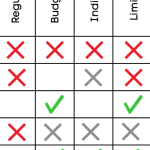
Paragon Health Institute has done a deep dive into the Medicaid expansion, circa 2024. Paragon researcher Liam Sigaud found that 9.2 million people - assuming a 70% Take Up Rate - do not meet federal requirements to qualify for enrollment under the Obamacare Medicaid expansion program. Michigan's share of that total is 248,240 improper enrollees, about 33.5% of our 740,441 expansion enrollment. Table 1, attached, is the money shot.
New York and California have the largest numbers of ineligible enrollees. Approximately 62% of people enrolled in California are not eligible. A thirty-five page report, so here are the Executive Summary, Introduction, and Conclusion:
EXECUTIVE SUMMARY
What This Paper CoversThis paper examines improper enrollment in the Medicaid expansion under the Affordable Care Act (ACA) in 2024. It builds on Paragon Health Institute’s earlier research, “Ineligible Enrollment in the ACA’s Medicaid Expansion: Evidence, Costs, and Remedies,” which estimated that roughly one in three expansion enrollees—4.9 million people—did not qualify for the program in 2019. With states’ post-COVID eligibility redeterminations now complete, this paper provides the first comprehensive assessment of how improper expansion enrollment has evolved since the pandemic.
Using Census Bureau’s American Community Survey (ACS) data, administrative enrollment data from the Medicaid Budget and Expenditure System (MBES), and per-enrollee spending figures from the Medicaid and CHIP Payment and Access Commission (MACPAC), the paper compares actual enrollment in the expansion group at the state level against estimates of the number of eligible individuals plausibly enrolled. The difference between the two reflects improper enrollment. Improper enrollees include people receiving expansion coverage despite income above the eligibility limit; people failing to meet citizenship, immigration, or residency requirements; and people who are qualified for Medicaid through traditional pathways.
The paper also examines:
- the structural features of Medicaid expansion’s financing—including the 9:1 federal match rate and state financing schemes such as provider taxes—that weaken states’ incentives to ensure proper eligibility determinations;
- the fiscal costs of improper enrollment for the federal government and the states, including the cost-shifting produced when traditional enrollees are misclassified into the expansion group;
- how improper enrollment changed between 2019 and 2024 both nationally and state by state; and
- post-unwinding enrollment trends, which show that expansion enrollment remains far above pre-pandemic levels even as traditional Medicaid enrollment has largely returned to pre-pandemic levels.
What We Found and What It Matters
Improper enrollment in Medicaid expansion is widespread, and it has grown dramatically worse since 2019. Under my central assumption of a 70 percent take-up rate among eligible individuals, I estimate that 9.2 million expansion enrollees—nearly half (46 percent)—were likely ineligible for the program in 2024. That is an 88 percent increase from the 4.9 million improper enrollees I estimated for 2019, when the ineligible share was 33 percent. The finding of substantial improper enrollment is robust to alternative assumptions: Even under an implausible 100 percent take-up rate—a theoretical lower bound—more than a quarter of expansion enrollees (5.2 million people) appear ineligible.
The fiscal consequences are severe. I estimate that improper expansion enrollment cost the federal government approximately $32.9 billion in 2024—about 6 percent of all federal Medicaid spending. California alone accounts for $10.4 billion in federal costs. Using a consistent methodology used in a previous Paragon analysis, I estimate that the federal costs stemming from improper expansion enrollment more than doubled from 2019 to 2024. Because roughly one-third of improper enrollees appear to be individuals who qualify for Medicaid through traditional pathways but were misclassified into the higher-match expansion group, states collectively saved an estimated $6.8 billion — a direct illustration of the perverse incentives built into the program’s financing.
Improper enrollment is a nationwide problem, but a handful of states drive a disproportionate share. California alone accounts for roughly 3.1 million improper enrollees—about one-third of the national total—with an estimated ineligible rate of 62 percent. I also find substantial levels of improper enrollment in New York, Louisiana, Oregon, and Washington. Yet the deterioration is broad-based: Of the 32 states that had expanded Medicaid before 2019, improper enrollment increased in 31, and 36 of the 41 expansion states (including the District of Columbia) show detectable improper enrollment in 2024.
These patterns are consistent with the structural incentives facing states. Because the federal government pays at least 90 percent of expansion costs—far above the roughly 60 percent average match for traditional enrollees—states bear almost none of the cost of improper expansion enrollment while reaping the political—and potentially economic—benefits of higher enrollment and more federal funding. The post-pandemic unwinding illustrates the consequences: By mid-2025, traditional Medicaid enrollment had returned close to pre-pandemic levels, but expansion enrollment remained 21 percent above its January 2020 level. The COVID-era enrollment surge in the expansion group, in other words, never reversed.
Improper enrollment is not a victimless accounting problem. It diverts resources from the vulnerable populations Medicaid was designed to serve—children, pregnant women, the elderly, and people with disabilities—strains the health system, erodes public trust, and imposes tens of billions of dollars in improper costs on federal taxpayers each year.
What We Recommend
Congress and the Trump administration have taken important initial steps through the One Big Beautiful Bill (OBBB) of 2025, which will require six-month eligibility redeterminations for expansion adults beginning in 2027, phase-down provider taxes and state-directed payments beginning in 2028 and impose financial penalties on states with high eligibility-related payment error rates beginning in 2030. These are meaningful guardrails, but their impact depends heavily on state implementation and federal commitments to ongoing oversight—and the estimates in this paper, based on 2024 data, predate these reforms.
Policymakers should go further to remove improper enrollees and stem the flow of new improper enrollees into the program, including taking the following actions:
- Rectifying the central structural flaw in Medicaid financing by reducing the 90 percent federal matching rate for expansion enrollees to the rate states receive for traditional enrollees, ensuring that improper enrollment imposes real costs on state budgets
- Strengthening income verification at enrollment by tightening “reasonable compatibility” thresholds for self-attestation and broadening real-time wage and income data checks
- Eliminating the federal requirement that states conduct passive (
- Extending the Payment Error Rate Measurement (PERM) program by requiring independent, annual eligibility audits in every state, enabling swifter penalties and corrective action
Without structural reform—including, above all, reforms to the financing arrangement that insulates states from the costs of their own eligibility failures—improper enrollment is likely to remain an embedded feature of Medicaid expansion rather than an isolated anomaly.
INTRODUCTION
The expansion of Medicaid under the ACA, broadly implemented in 2014, has become a central feature of the U.S. health system, covering about 10 percent of non-elderly adults.1 Yet the program is marred by high taxpayer costs, mediocre health outcomes,2 and pervasive deficiencies in program integrity.3 Enrollment in the expansion group has far exceeded initial projections, prompting concerns that large numbers of people who do not qualify for Medicaid may be receiving benefits under the ACA’s expansion.4 Enrollees can be ineligible for expansion coverage for a variety of reasons, including having income in excess of eligibility limits, failing to meet requirements related to citizenship/immigration status or state residency, or qualifying for Medicaid through traditional pathways. Whatever the reason, improper enrollment erodes public trust in government, diverts resources away from intended beneficiaries, and imposes unwanted costs on taxpayers.
There are strong reasons to believe that Medicaid expansion may be particularly vulnerable to this type of abuse. The structural design of the program encourages lax eligibility enforcement. One of the core flaws is that while the states are responsible for monitoring their Medicaid rolls and preventing improper enrollment, the fiscal costs of improper enrollment are paid almost entirely by the federal government, which covers at least 90 percent of the cost of expansion enrollees—far more than the approximately 60 percent average federal match states receive for traditional enrollees such as low-income children and people with disabilities.5 As a result, when ineligible individuals receive benefits through the expansion group, states bear almost none of the cost.6 Furthermore, high enrollment under Medicaid expansion—regardless of enrollees’ true eligibility—delivers political benefits to state policymakers. These misaligned incentives are compounded by financing arrangements—such as provider taxes and intergovernmental transfers—that allow states to capture additional federal matching dollars while further reducing their effective share of program costs. Under the ACA’s 90 percent federal reimbursement rate, the rate of return on these financing schemes is roughly six times higher for expansion enrollees than for the traditional Medicaid population. These two factors raise serious concerns that states may not adequately invest in program integrity measures.
The same incentive structure also creates fiscal motives for states to misclassify individuals eligible for Medicaid under traditional pathways into the expansion group. Because the federal match for expansion enrollees is roughly 30 percentage points higher than the average for traditional enrollees, states stand to save thousands of dollars per enrollee per year by placing them in the expansion group. Research suggests these reclassifications may be widespread, affecting millions of enrollees and substantially inflating federal Medicaid spending.7
Federal investigations into expansion states’ Medicaid records provide direct evidence of improper enrollment in the expansion group. In an audit of New York’s Medicaid program, investigators reviewed eligibility documentation for a random sample of Medicaid enrollees New York had classified as belonging to the expansion group and for whom New York had received federal funding. The review found that 28 percent of these enrollees were ineligible.8 Similar audits in California9 and Colorado10 found that 18 percent and 23 percent, respectively, of randomly sampled enrollees in the expansion group were ineligible. In some states, auditors identified large numbers of additional enrollees who, based on incomplete records, may not have met Medicaid eligibility requirements.11
Additional evidence of improper enrollment in the expansion group comes from statistical studies using publicly available data on income, family composition, and Medicaid enrollment. Using 2012–2017 Census Bureau data, one study showed that Medicaid take-up after the ACA’s implementation rose not just among eligible adults but also among those above the income threshold. The analysis suggested approximately 522,000 seemingly income-ineligible enrollees across nine expansion states.12 Because the study focused on a small subset of expansion states in the early years of the expansion, its results likely severely underestimate the current scale of improper enrollment nationally. A broader study using a similar methodology uncovered “egregious eligibility errors in many states,” including between 2.23 million and 3.25 million improper Medicaid expansion enrollees who had income above the eligibility threshold in 2017.13
Last year, the Paragon Health Institute published the most recent quantitative assessment of the scope of improper enrollment under Medicaid expansion. Combining actual enrollment in the expansion group with an estimate of the number of eligible people plausibly enrolled derived from Census Bureau data, I calculated that approximately one in three expansion enrollees—4.9 million people—likely did not qualify for the program in 2019, imposing an annual cost to the federal government of $23.8 billion in improper Medicaid spending.14 The report also used the estimated rate of improper enrollment in each state in 2019 to generate estimates of improper enrollment in 2024. The extrapolation yielded an estimated 6.6 million improper enrollees in 2024 and a federal cost of $36.9 billion.
Applying a similar methodology to more recent data, this paper estimates the magnitude of improper expansion enrollment in 2024. As enrollment in the expansion group has grown (from 14.7 million in 2019 to 20.2 million in 2024), my central estimate implies that improper enrollment has surged to nearly one in two expansion enrollees in 2024. Large increases in per-enrollee costs have further amplified the fiscal consequences, imposing additional Medicaid costs on the federal government of approximately $54.3 billion in 2024—more than double what the federal government spent on improper enrollees in 2019.15 Using a more expansive methodology that accounts for spillover effects of improper Medicaid enrollment on the ACA exchanges, I estimate that the net federal cost of improper expansion enrollment was approximately $32.9 billion in 2024.16 Moreover, the updated 2024 results presented in this paper substantially exceed the extrapolated 2024 estimates cited above from my prior analysis, indicating that program integrity has deteriorated since 2019.
<Snip>
CONCLUSION
The harm from improper enrollment extends beyond the federal budget. Improper expansion enrollees crowd out intended beneficiaries, including the traditional Medicaid population—children, pregnant women, the elderly, and people with disabilities—for whom the program was originally designed. Studies have documented that expansion exacerbated health system strain, resulting in longer waits for medical appointments, reduced health spending on low-income children, and worse access to emergency care.25 Restoring eligibility integrity to Medicaid expansion is not merely a matter of fiscal responsibility; it is a matter of fairness to the vulnerable populations that the program was built to serve.
<Snip>
Get MHF Insights
News and tips for your healthcare freedom.
We never spam you. One-step unsubscribe.
Sponsors

J & DE Family Charitable Fund

Friends
of MHF

Kelly Grotendiek
Philip Harbach
Dale Johnson
Drs. Jeffrey and Joni Jones
Vickie Kahle
Tammy Kipen
Marlin & Kathy Klumpp
Melanie Kurdys
Ruth Nobel
Patrick Peterson
Stephanie Poortenga
Jeanne Smit
Ben and Hope Staal
John Tuinstra
Jacki VanHuis
Sandy Walker
Sign Up for MHF Insights to keep up on the latest in Michigan Health Policy